

10 Aug Is Your Farmland Sitting Idle? How Landowners Are Turning Fields Into Campsites
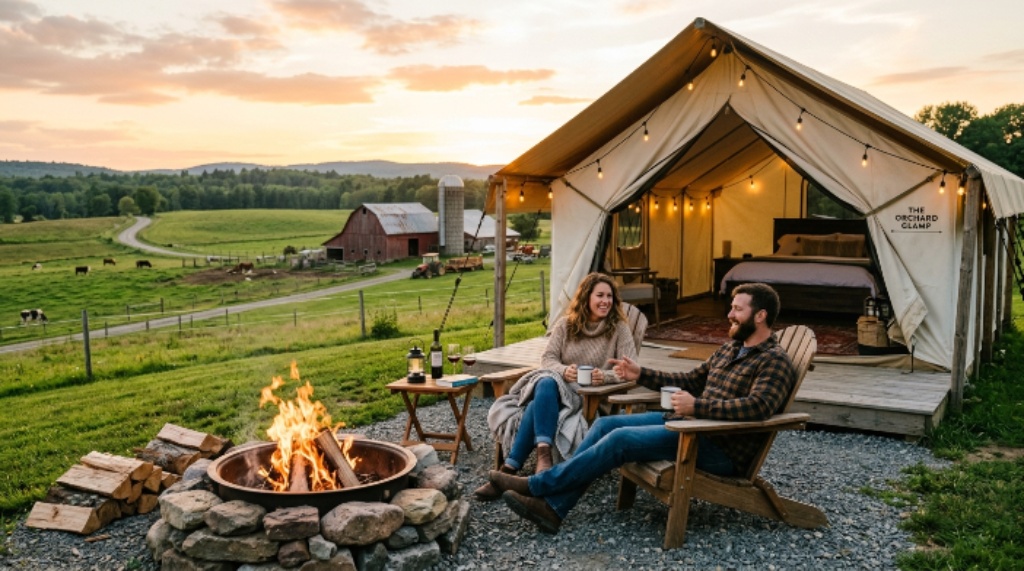
Fields that once grew crops are now hosting campfires. Meadows that sat quiet all season are filling up with tents, yurts, and glamping pods. Across the United States, landowners are discovering that their acres can earn income in a way they never expected. The shift is real; it is growing fast, and the entry barrier is lower than most people think.
If you own rural land and are wondering whether hosting campers makes sense for you, this guide will walk you through everything you need to know.
Why Landowners Are Making the Shift
Farming income has always been unpredictable. Commodity prices swing. Weather disrupts yields. Input costs keep rising. For many rural landowners, a field that produces little or nothing for part of the year represents a missed opportunity.
At the same time, demand for outdoor stays has surged. Urban families want to disconnect. Couples seek experiences that no hotel lobby can offer. Travelers are paying premium rates for a quiet night under the stars on a working farm. This demand does not look like a passing trend. It looks like a structural shift in how people spend their leisure time and money.
More than half of all landowners who partner with Hipcamp, one of the country’s leading outdoor stay platforms, welcome guests onto working farms, ranches, and vineyards. For many of them, hosting campers has become one of the most reliable income streams to help finance their property’s ongoing operations
Therefore, if your land sits partially idle for months at a time, you may already be sitting on a viable hospitality business without realizing it.
What Kind of Land Works Best
You do not need a scenic mountain view or a lakefront property. Almost any rural land with some natural character can attract guests. What matters most is having a flat, accessible area where someone can safely pitch a tent or park a self-contained RV.
That said, certain features do increase appeal and allow higher nightly rates:
- Mature trees for shade and privacy
- Access to a stream, pond, or water feature
- Open views of fields, hills, or sky
- Proximity to hiking trails, fishing spots, or local attractions
- A working farm environment that guests can observe or participate in
Guests visiting farm-based campsites often come specifically because of the agricultural character of the land. They want to hear animals in the morning, watch a tractor work the fields, and buy fresh eggs before they leave. The farm itself is the attraction. You do not need to hide it.
How Much Can You Earn?
Income varies considerably depending on your setup, location, and amenities. However, the numbers can be meaningful even at a basic level.
| Campsite Type | Setup Cost | Typical Nightly Rate |
| Basic tent site with fire pit | $200 to $1,000 | $40 to $80 per night |
| RV site with hookups | $2,000 to $8,000 | $50 to $100 per night |
| Bell tent or canvas glamping tent | $3,000 to $10,000 | $80 to $200 per night |
| Yurt, tiny cabin, or pod | $10,000 to $50,000 | $150 to $350 per night |
| Luxury glamping structure | $50,000 to $120,000 | $200 to $500 per night |
High-performing glamping sites typically achieve 60 to 80 percent occupancy and report profit margins of 30 to 50 percent once they are established. The payback period for a well-placed glamping unit runs from two to four years, with basic campsites returning their setup cost much faster.
Consider a simple example. A landowner with three basic tent sites earning $60 per night at 50 percent occupancy across a six-month season generates roughly $16,000 per year. Add two glamping tents at $150 per night at the same occupancy, and that number climbs above $50,000. These are conservative figures, though understanding how to fix retained earnings as you scale is essential to keeping those profits on your balance sheet. Many hosts earn significantly more.

The Regulatory Landscape: What the Law Says in 2026
Regulations governing farm-based camping vary by state and county. However, the legal environment is improving steadily for landowners across the US, largely thanks to advocacy from agritourism groups and platforms like Hipcamp.
California is one of the most important examples. The Low-Impact Camping Areas Act, known as Assembly Bill 518, took effect on January 1, 2026. It gives counties the option to permit up to nine temporary campsites on parcels of at least two acres, with a maximum density of one campsite per acre. Guests can stay for up to 14 consecutive nights and a maximum of 28 nights per calendar year. Landowners must have a host or manager reachable by phone around the clock and must comply with local rules on fire safety, waste, noise, and sanitation.
Colorado’s Chaffee County passed a private-land camping ordinance that allows simplified approval for up to ten campsites on properties zoned rural, agricultural, or residential. Maryland law now includes camping and incidental outdoor stays within the state’s formal definition of agritourism, opening clear legal pathways for farm-based hosts. Several other states have introduced or updated similar frameworks in recent years.
The general direction of travel is toward making it easier for landowners to host small-scale, low-impact camping on agricultural land. Regulations written decades ago for commercial campgrounds are being updated to reflect today’s reality.
Before you host anyone, check your specific local rules. Contact your county planning department and ask about agritourism permits, campsite density limits, fire codes, and any occupancy tax you may need to collect. Start this research early, because the permitting timeline varies significantly by jurisdiction.
Platforms That Help You Find Guests
You do not need to build your own booking system or run your own marketing campaign to get started. Several platforms connect landowners directly with travelers looking for outdoor stays on private land.
Hipcamp is the largest platform in this space. It operates across the United States, Canada, Australia, and the United Kingdom. Hosts list their property, set their own rates, and manage bookings through the platform. Guests pay Hipcamp directly, and the platform takes a percentage of each booking. Hipcamp also provides up to one million dollars in liability coverage for hosts, which is one of the most significant protections available.
Harvest Hosts offers a different model. It focuses on self-contained RVs visiting wineries, farms, breweries, and attractions in exchange for a membership fee paid by travelers. There are no nightly fees, but hosts benefit from direct spending by guests on products, experiences, and farm sales.
Airbnb includes a dedicated section for glamping and unique outdoor stays. It reaches a large general travel audience and suits hosts who have built more polished accommodations.
Additionally, several regional and niche platforms serve specific markets such as equestrian travelers, hunting guests, and off-grid adventurers. Listing on more than one platform can increase your visibility and keep your occupancy higher across the season.
How to Get Started: A Simple Roadmap
Starting small is the best approach for most landowners. You do not need to invest in a luxury glamping suite on day one. A flat spot, a fire pit, and a clean portable toilet can be enough to welcome your first guests and start learning what works on your property.
| Step | Action |
| 1 | Check local zoning laws and county agritourism regulations |
| 2 | Identify your best site: flat, accessible, and visually appealing |
| 3 | Clear hazards such as dead trees, unstable ground, and drainage issues |
| 4 | Assess road access, especially for RV sites |
| 5 | Set up basic amenities: fire pit, trash receptacles, portable restroom |
| 6 | Research liability insurance options before hosting any guests |
| 7 | Create your listing on Hipcamp, Harvest Hosts, or Airbnb |
| 8 | Start with a low nightly rate and gather reviews |
| 9 | Reinvest income into upgrades that increase your nightly rate |
| 10 | Expand capacity only after you understand local demand |
Many successful farm hosts started with a single basic site and expanded steadily as their reputation and bookings grew. Crossing Creeks Farm in Shelbyville, Tennessee, for example, began with a single RV hookup. Over time, the owners added additional RV sites, glamping accommodations, and a dog park, building a full rural retreat campground from a modest starting point.

What Guests Are Actually Looking For
Understanding your guests helps you market your property more effectively and deliver an experience they will share and review positively.
Farm-based campers are not looking for a resort experience. They want authenticity, quiet, and connection to the land. They want to wake up to birdsong rather than traffic noise. And they want to watch the sunrise over an open field and cook breakfast over a fire.
Many guests specifically seek the agricultural character of the land. They book farm campsites because they want to be near livestock, crops, and the rhythm of working land. Offering small farm experiences, such as a chance to collect eggs, watch milking, or pick seasonal produce, can increase both your booking rate and your nightly price.
Eco-friendly features also attract today’s travelers. Solar power, composting toilets, and low-impact site design appeal to a growing segment of outdoor guests who want their stay to align with their values. These features can also reduce your operating costs over time.
Conclusion
Idle farmland does not need to stay idle. Across the United States, landowners are generating meaningful supplemental income by opening small portions of their property to campers and glampers. The regulatory environment is improving, with states like California and Colorado passing new laws in 2026 that make it easier to host small-scale camping on agricultural land. Income from basic tent sites starts at $40 per night and can reach $500 per night for premium glamping experiences. Platforms like Hipcamp and Harvest Hosts handle bookings, payments, and provide liability protection so that hosts can focus on the experience rather than the logistics. The entry cost is low, the demand is strong, and the return can be significant. Starting with one flat site, checking your local rules, and listing with a trusted platform is all it takes to find out whether your land has more to offer than you realized.
Frequently Asked Questions
How much land do I need to start hosting campers?
You do not need a large property to get started. California’s new Low-Impact Camping Areas Act, for example, allows camping on parcels as small as two acres, with a maximum of one campsite per acre. In practice, even a single flat quarter-acre site away from your home can accommodate one or two tent sites or a single RV hookup. The minimum viable setup is simply a safe, accessible, level spot.
Do I need a permit to host campers on my farmland?
In most US jurisdictions, yes. Requirements vary significantly by state and county. Some areas require a formal agritourism permit, while others have simplified processes for small-scale, low-impact camping. Contact your county planning department to understand what applies to your property before you accept any guests or list your property on any platform.
What is the easiest campsite type to start with?
Basic tent sites with a fire pit and a portable restroom are the easiest and lowest-cost starting point. Setup costs typically range from $200 to $1,000 per site, and no permanent construction is required. This allows you to test demand on your property before committing to larger investments like glamping structures or RV hookups with electrical service.
Which booking platform is best for farm-based hosts?
Hipcamp is the most popular platform specifically designed for private landowner hosts, including farmers and ranchers. It handles bookings, payments, and provides up to one million dollars in liability coverage per incident. Harvest Hosts works well for hosts who want to welcome self-contained RVs without nightly fees, generating income through direct on-site purchases. Airbnb is effective for hosts with more polished glamping accommodations who want to reach a broad travel audience.
Does hosting campers affect my agricultural land classification or property tax status?
This depends on your state and local jurisdiction. In many states, agritourism income is considered compatible with agricultural land use and does not affect your agricultural classification or property tax benefits. However, adding permanent structures or changing the primary use of the land can trigger reassessment in some areas. Consult your county assessor and a local attorney or farm adviser before making any significant changes to your operation.
Sorry, the comment form is closed at this time.