


30 Oct Green Commercial Construction: Reducing Environmental Impact
Key Takeaways
- Green commercial construction reduces environmental impact and operational costs through sustainable design, materials, and technology.
- Businesses benefit from tax incentives, higher property values, and increased tenant demand.
- Certification programs like LEED and regulatory frameworks promote industry-wide adoption.
- Despite initial costs, innovative solutions ensure a sustainable future for commercial buildings.
Introduction to Green Commercial Construction
Green commercial construction transforms how businesses approach building projects, emphasizing environmentally responsible practices that yield lasting benefits. Companies can achieve both environmental and economic gains by focusing on energy efficiency, using sustainable materials, and advanced construction technologies. For those aiming to implement these strategies in their projects, companies like Snyder Construction offer expert guidance in eco-friendly design and development.
This approach is not simply about checking boxes or following trends. It is a commitment to reducing the negative impact of commercial properties on the planet while creating high-performance buildings that save money and resources throughout their lifecycle. The result is greater market competitiveness for businesses and a step towards global sustainability goals.
Key Strategies for Sustainable Building
- Energy Efficiency: New and existing commercial properties can significantly reduce power usage and expenses by installing modern HVAC systems, high-grade insulation, and energy-efficient LED lighting. Building automation and energy management systems further ensure operational efficiency and minimize waste.
- Eco-Friendly Materials: Choosing recycled steel, rapidly renewable resources like bamboo, low-carbon concrete, and bio-based composites reduces the carbon output from the construction process. These materials diminish environmental harm and can improve indoor air quality and building longevity.
- Water Conservation: Integrating low-flow plumbing fixtures, rainwater harvesting solutions, and drought-resistant landscaping can drastically cut water usage while preserving local ecosystems. Such considerations reduce utility bills and help meet stringent municipal requirements.
Innovative Technologies in Green Construction
Technological advancements are at the heart of scalable green building practices. For example, AI-driven predictive maintenance tools can analyze HVAC and other building equipment in real time, reducing downtime and slashing unnecessary energy consumption by up to 25%. This shift not only benefits maintenance budgets but also helps ensure assets are operating at optimal efficiency.
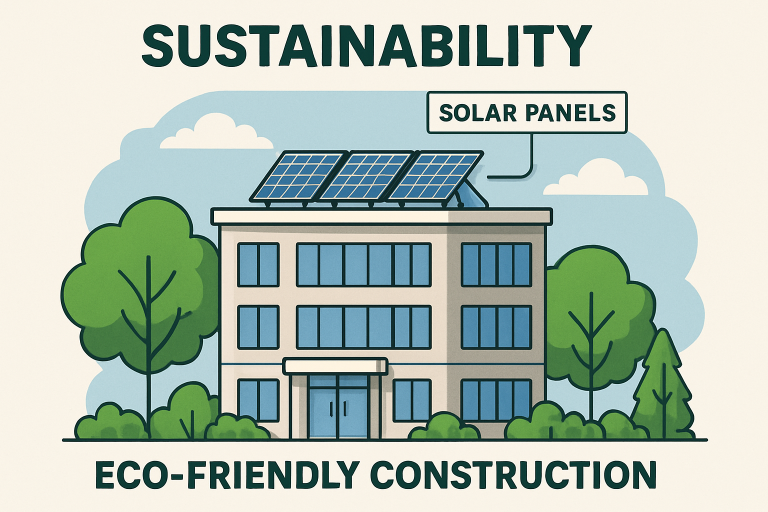
Moreover, renewable energy is increasingly central to contemporary green construction. Solar panels, often rooftop-mounted or integrated into windows, and small-scale wind turbines enable buildings to generate clean energy. The integration of battery storage solutions ensures that this energy is available when needed, further reducing reliance on nonrenewable sources. The U.S. Department of Energy offers a comprehensive overview of the latest building performance and energy generation advances.
Economic Benefits of Sustainable Practices
Organizations that invest strategically in green construction experience distinct economic rewards. Across many regions, governments offer substantial tax credits, grants, and rebates for incorporating energy-saving systems and materials into commercial builds. These financial incentives lower initial costs and encourage faster transitions to sustainable practices.
- Tax Incentives: Tax credits are available for enterprises adopting energy-efficient technologies, dramatically reducing up-front expenditures for green initiatives.
- Reduced Operating Costs: Highly efficient buildings account for much lower utility costs over time, and regular savings can be significant enough to fund future upgrades or expansions.
- Increased Property Value: As awareness grows around environmental responsibility, tenants and investors place greater value on sustainable buildings, leading to higher property valuations and improved rental demand.
Regulatory Framework and Certifications
Navigating evolving compliance requirements is an integral aspect of sustainable commercial construction. Two cornerstone programs in this area are LEED (Leadership in Energy and Environmental Design), an internationally acknowledged certification that validates buildings’ environmental achievements, and CALGreen, California’s comprehensive building standards code specifically designed to minimize construction’s ecological footprint.
- LEED Certification: LEED evaluates buildings based on energy efficiency, water savings, and materials selection, motivating developers to achieve high standards of excellence.
- California Green Building Standards Code (CALGreen): CALGreen establishes benchmarks that require significant reductions in energy and water use, waste management, and indoor environmental quality.
Staying ahead of these changing codes ensures compliance while safeguarding reputations and fostering innovation within the industry.
Challenges and Future Outlook
- Initial Costs: Many developers continue to struggle with the expense of integrating premium sustainable materials and technologies. However, lifecycle calculations often reveal that these costs pay for themselves within a few years due to lower ongoing expenses.
- Regulatory Compliance: The evolving maze of green standards, building codes, and voluntary programs can be complex, requiring up-to-date expertise to navigate smoothly and efficiently.
Despite these obstacles, momentum for green commercial construction keeps growing. Advancements in materials science, smart automation, and renewable energy integration are driving costs down and performance up. Businesses willing to invest early are well-positioned to reap the rewards as market and regulatory demands tighten.
Final Thoughts
Green commercial construction is more than a trend—it is a crucial part of building a sustainable future for businesses, communities, and the planet. Through thoughtful investment in energy efficiency, innovative materials, and advanced technologies, organizations reduce their costs and carbon footprint. Industry-wide adoption of green construction is essential for resilience, profitability, and a healthier environment.
Sorry, the comment form is closed at this time.