

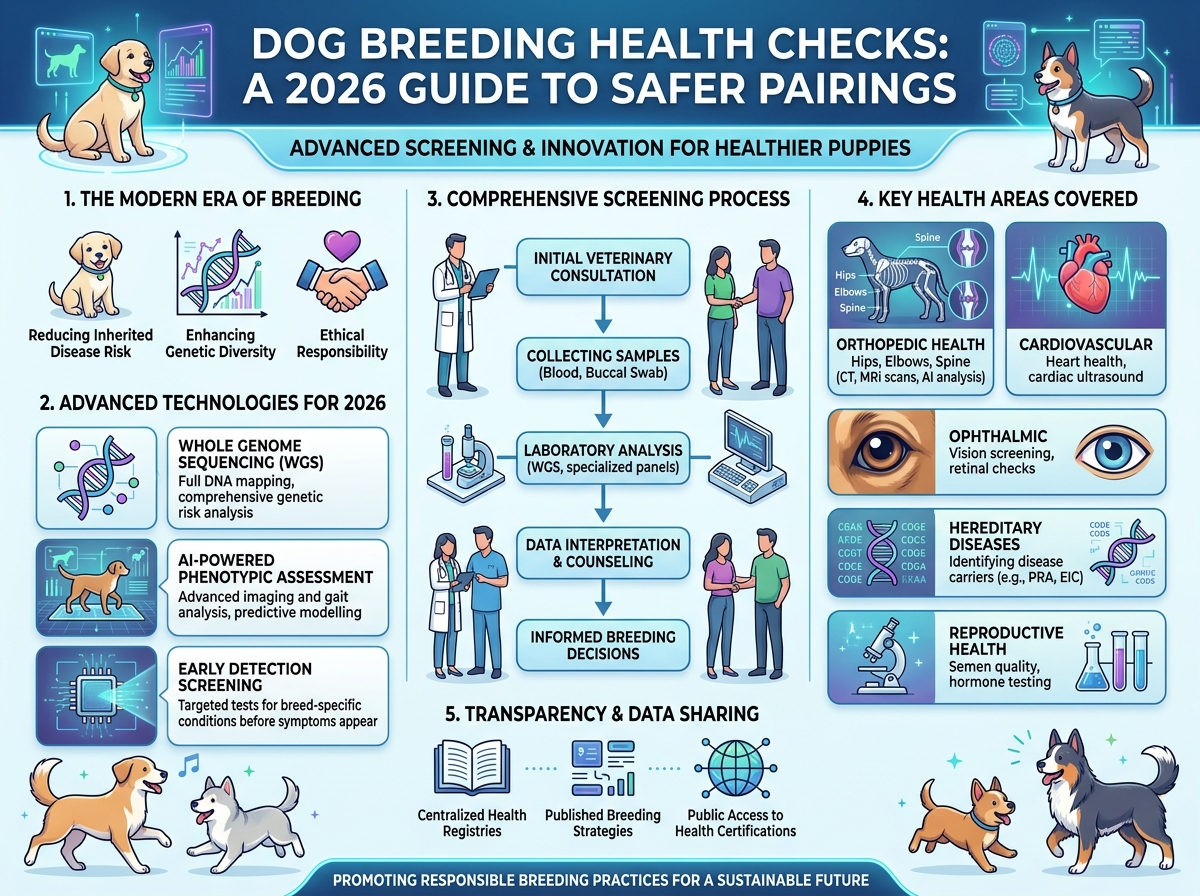
19 Aug Dog Breeding Health Checks: A 2026 Guide To Safer Pairings
Key Takeaways
- A dog that looks healthy still needs complete, documented screening before breeding.
- Testing should be tailored to the breed, family history, age, and individual health risks.
- Temperament, reproductive history, and recovery are as important as DNA results.
- Clear records help breeders make safer decisions and share accurate information with future owners.
- Responsible breeding includes knowing when a dog should not be bred.
Choosing two dogs for a planned litter should never come down to appearance, size, color, or pedigree alone. Adult dogs may develop concerns that were not apparent in puppies, including orthopedic problems, eye disease, heart changes, allergies, reproductive difficulties, or behavioral issues. A thoughtful evaluation considers the whole dog and underlying health patterns.
For prospective owners researching adult breeding dogs, information from toy Schnauzer breeders can be a useful starting point for more informed questions. Still, every proposed pairing deserves its own review of veterinary records, test results, temperament, and family history before a breeding decision is made.
Health checks cannot guarantee that every puppy will remain free of illness throughout life. They can, however, reduce avoidable risk and help breeders avoid repeating known problems. The goal is not to find a “perfect” dog, but to make practical, evidence-based decisions that protect the welfare of both parents and puppies.
Start With A Complete Veterinary Exam
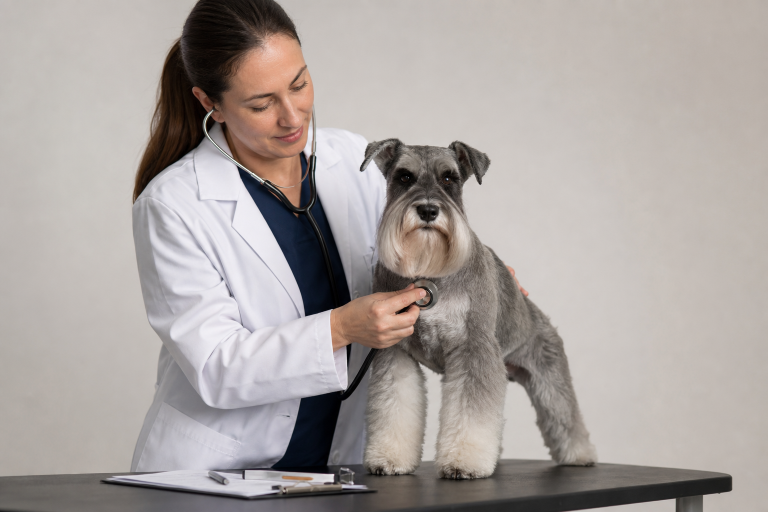
Schedule a full examination with a veterinarian before breeding, even when a dog appears active and well. The visit should include body condition, weight, movement, skin and coat, teeth, breathing, heart and lung sounds, and a review of current medications, past injuries, surgeries, and chronic conditions.
Discuss vaccinations, parasite prevention, nutrition, and whether bloodwork, urinalysis, imaging, or a specialist referral is appropriate. A reproductive veterinarian may be especially helpful when there is a history of infertility, difficult deliveries, miscarriage, poor milk production, or slow recovery after a litter.
Use Breed-Specific Health Testing
A broad DNA panel is useful, but it is not a complete breeding clearance. Each breed may have recommended screenings based on conditions that occur more often within its population. Breed clubs, veterinary specialists, and recognized health registries can help identify the right tests.
- Genetic screening: Tests for known inherited disease variants.
- Orthopedic evaluations: Hip, elbow, patella, or other joint assessments when relevant.
- Eye and cardiac exams: Clinical screening for inherited or developing disease.
- Additional testing: Thyroid, hearing, respiratory, or neurological assessments when a breed’s health profile supports them.
Read DNA Results With Care
DNA results are usually described as clear, carrier, at-risk, or uncertain. A clear result means the tested variant was not found. A carrier may carry one copy of a recessive variant without being clinically affected. An at-risk result may indicate a greater chance of disease, depending on the condition. An uncertain result needs professional interpretation.
A carrier result does not automatically require removing a healthy dog from every breeding plan. It does mean the dog should only be paired carefully, typically with a tested, clear mate for that specific condition. Always request the full laboratory report, test date, and identifying information that matches the dog’s microchip or registration records.
Check Temperament And Behavior
Stable behavior is part of canine health. Observe the dog in more than one setting, including handling, grooming, travel, normal household activity, and controlled interactions with unfamiliar people and dogs. Normal caution is different from persistent fear, panic, unmanageable reactivity, or aggression.
Quick Temperament Checklist
- Recovers reasonably after a surprising sound or unfamiliar situation.
- Allows routine handling without extreme distress.
- Shows predictable responses around people and other animals.
- Does not have a pattern of fear-based or unexplained aggression.
- Can settle after excitement or mild stress.
Consider Age, Reproductive History, And Recovery
Age affects fertility, pregnancy, delivery, and recovery. Review previous litter sizes, pregnancy losses, cesarean sections, nursing problems, infections, and recovery time. A dog that struggled physically or emotionally after a previous litter needs an individualized veterinary assessment before another pregnancy is considered.
Breeding plans should allow adequate time between pregnancies and should be adjusted when new concerns arise. There should also be a clear emergency plan for veterinary care during pregnancy, labor, delivery, and the nursing period.
Review Family History And Genetic Diversity
Look beyond the two intended parents. Gather honest health information about parents, grandparents, siblings, and previous offspring. Repeated patterns of seizures, allergies, heart disease, poor movement, eye problems, difficult births, or early deaths can reveal risks that a single test does not capture.
Pedigree research also helps avoid overly close pairings that narrow genetic diversity. A lower-risk match between less-related dogs may be wiser than pairing closely related dogs simply because they share desirable appearance traits.
Keep Records Clear And Verifiable
- Create a dedicated file for each adult dog.
- Save veterinary notes, screening certificates, DNA reports, vaccination records, and reproductive history.
- Record the provider and date for every examination or test.
- Match results to the dog’s microchip, registration, or other permanent identification.
- Review the complete file before every planned pairing, not just the first.
When The Right Choice Is Not To Breed
Pause or decide against breeding when there are unresolved medical concerns, failed breed-recommended screenings, unstable temperament, repeated reproductive complications, poor recovery after prior litters, or limited ability to provide prompt veterinary care. Avoiding a pairing can be a difficult decision, but it is often the most responsible one.
Conclusion
Responsible breeding starts with patience and honest evaluation. A suitable adult dog should be assessed through physical health, breed-specific screening, behavior, reproductive readiness, family history, and lifelong welfare. When records are current and decisions are guided by evidence rather than convenience, breeders are better positioned to protect the dogs in their care and the generations that follow.
Sorry, the comment form is closed at this time.