


24 Feb Sustainable Landscape Design Trends for Modern Yards
Key Takeaways
- Utilize native and drought-tolerant plants to conserve water and support local ecosystems.
- Incorporate permeable materials and efficient irrigation systems to manage water responsibly.
- Design outdoor spaces that promote wellness and connect with nature.
- Use recycled and natural materials to reduce environmental impact.
- Implement vertical gardens and smart technology to maximize space and efficiency.
As sustainability becomes a priority for modern homeowners, transforming outdoor spaces has evolved far beyond lawns and ornamental shrubs. Today, crafting an eco-friendly landscape means considering how every element, from plant selection to hardscape materials, impacts the environment. With the right approach, you can create a yard that is not only visually stunning but also lowers your ecological footprint, supports local wildlife, and conserves resources. Partnering with experienced professionals like My Sons Landscape can introduce innovative, eco-conscious solutions tailored to your unique space.
Incorporating sustainable techniques into your landscape not only benefits the planet but also elevates your enjoyment and connection to the outdoors. Features such as smart irrigation, recycled materials, and native plantings are more accessible than ever, bringing both efficiency and elegance to any yard.
Staying current with these trends means you are not only making a sustainable choice but also investing in a future-ready yard. Sustainable landscaping is no longer just about conservation; it is about creating spaces that cater to wellness, efficiency, and modern aesthetics.
Embrace Native and Drought-Tolerant Plantings
One of the most significant shifts in residential landscaping is the adoption of native and drought-tolerant plant varieties. Plants that are indigenous to your region thrive on local rainfall, resist common pests, and reduce the need for chemical intervention and supplemental watering. By replacing water-intensive grasses with native wildflowers, grasses, and shrubs, you not only conserve water but also provide essential habitats for birds, bees, and butterflies. This diversity encourages a healthier, more resilient ecosystem while minimizing ongoing maintenance.
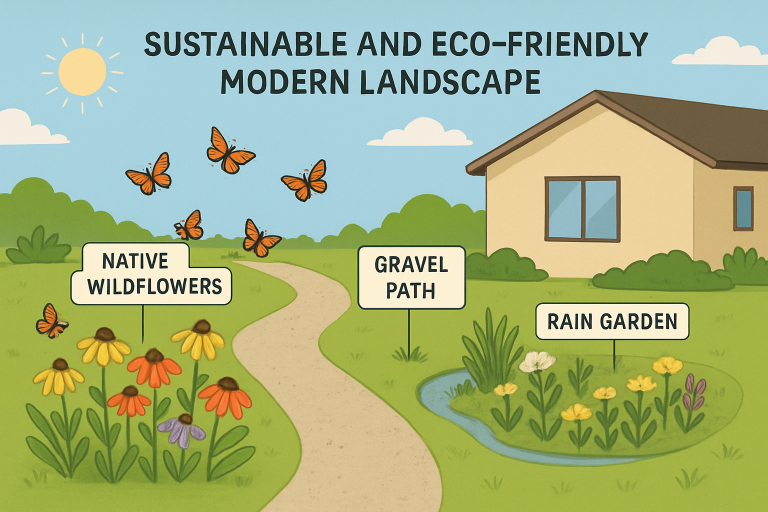
Xeriscaping, a landscaping approach that emphasizes drought-resilient plants and soil amendments, continues to grow in popularity. Homeowners benefit from reduced utility bills and increased landscape durability.
Implement Permeable Landscapes and Efficient Irrigation
Climate-adaptive landscapes are designed to manage water wisely. The use of permeable hardscape materials, such as gravel, permeable concrete, or open-paver systems, allows rainwater to soak directly into the ground. This process reduces stormwater runoff, prevents erosion, and helps recharge groundwater naturally. In tandem, efficient irrigation methods like drip systems and weather-sensing controllers distribute water directly to plant roots and adjust in response to daily weather changes, further eliminating waste.
Smart irrigation now leverages technology such as soil moisture sensors and automated scheduling, cutting water use without sacrificing the health of your landscaping.
Design Outdoor Wellness Zones
Modern yards are evolving into comprehensive wellness retreats. By integrating elements like meditation nooks, natural stone patios, and soothing water features, you can create outdoor sanctuaries that nourish both body and mind. These spaces facilitate relaxation and rejuvenation, encouraging a healthy outdoor lifestyle. Simple additions such as hammocks, yoga decks, or fire pits extend your yard’s usability throughout the seasons and invite a deeper connection with nature.
Utilize Recycled and Natural Materials
Environmentally conscious design extends into hardscaping choices. Emphasizing recycled or reclaimed materials minimizes the demand for new resources and gives new life to previously used products. For instance, pathways built from salvaged bricks or patios constructed with recycled composite pavers offer character and sustainability. Likewise, opting for locally sourced stone and sustainably harvested wood ensures your materials have a reduced carbon footprint and harmonize with the surrounding environment.
Incorporate Vertical Gardens and Smart Technology
Urban gardens and compact yards benefit from creative solutions such as vertical gardens. Growing plants upward along fences, exterior walls, or custom trellises adds more greenery and increases biodiversity, even in the smallest spaces. These green walls can improve air quality and insulate buildings against extreme temperatures. Innovations in smart technology further boost sustainability. Features such as programmable LED landscape lighting, automated irrigation, and app-based garden monitoring enable homeowners to maintain lush, eco-friendly yards with less effort and lower utility costs.
Adopt Warm Minimalism in Design
Design preferences are trending toward warm minimalism, which balances simplicity with natural textures and organic touches. Clean lines and a limited color palette are softened by tactile elements such as limewashed stone, raw cedar, or woven grasses. This approach creates inviting outdoor environments that feel tranquil yet modern, integrating comfort without unnecessary clutter.
Focus on Edible Landscaping
Combining aesthetics with functionality, edible landscaping (or foodscaping) is rising in favor. By introducing edible plants such as rainbow chard, herbs, and even fruiting shrubs into ornamental beds or along borders, yards become more productive and sustainable. This multipurpose planting not only supplies fresh ingredients for meals but also reduces trips to the grocery store and supports pollinator populations. Integrating these edible choices with decorative perennials and annuals ensures the yard remains attractive year-round.
Final Thoughts
Redesigning your yard with sustainability at its core means balancing beauty, functionality, and environmental responsibility. By incorporating native plants, water-wise systems, recycled materials, vertical gardening, modern design trends, and edible elements, today’s homeowners can create vibrant spaces that benefit the environment. These efforts yield long-term benefits for your family, local wildlife, and the planet, making a sustainable landscape a smart investment for years to come.
Sorry, the comment form is closed at this time.