

02 Apr How to Choose the Right Heavy-Duty Casters for Industrial Equipment
Key Takeaways
- Know Load Capacity: Ensure each caster can safely handle equipment weight with a safety margin.
- Choose Wheel Material Wisely: Match polyurethane, nylon, or steel wheels to floor and environmental conditions.
- Select Wheel Size and Type: Larger, wider wheels improve stability; use swivel for maneuverability, rigid for straight-line movement.
- Consider Bearings and Environment: Bearings affect roll effort; temperature, chemicals, and floor type impact performance.
- Maintain and Consult Experts: Regular upkeep and professional advice extend caster life, enhance safety, and boost efficiency.
Understanding Load Capacity
When selecting casters for industrial equipment, one of the first and most important factors is understanding load capacity. Accurately determining the total weight your equipment will carry is essential. Be sure to calculate the maximum anticipated load and always add a safety factor to account for uneven load distribution and shock loading. For example, if your machine weighs 4,000 pounds and will use four casters, each caster should support more than 1,000 pounds to ensure safety and long-term durability. Whether you are outfitting machinery, carts, or work platforms, working with reliable heavy duty casters is crucial to maintaining a high level of safety and efficiency in your facility.
Load requirements can fluctuate based on how the equipment is used and whether it experiences sudden impacts or shifts in weight. Overloading even a single caster can lead to premature failure and possible injury or property damage. Evaluating load requirements upfront creates a strong foundation for choosing the right product while also protecting your staff and workplace.
Selecting the Appropriate Wheel Material
The material used for caster wheels is another critical decision point, largely determined by your equipment’s operational environment. Here are some of the most common wheel materials and when to use them:
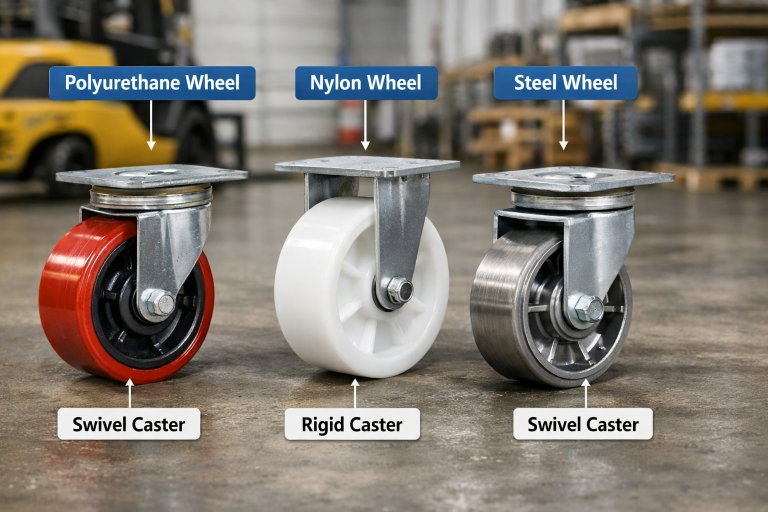
- Polyurethane Wheels: Ideal for facilities that prioritize floor protection and reduced noise. They are suitable for warehouses, manufacturing spaces, and applications where smooth, quiet movement is favored.
- Nylon Wheels: Known for their resistance to chemicals and moisture, nylon wheels perform well in wet or corrosive environments. Their durability makes them a popular choice for food processing or chemical plants.
- Steel or Cast Iron Wheels: Best for extremely heavy loads or abrasive, uneven surfaces, these wheels thrive in the most rugged environments but can be noisy and may damage sensitive flooring. Always assess floor surface compatibility when considering these materials.
Matching the right wheel material to your unique operating requirements not only safeguards your floors from damage but also ensures reliable equipment movement over the long term. According to Hamilton Caster, neglecting to account for floor conditions and environment can lead to costly repairs and reduced operational efficiency.
Considering Wheel Diameter and Width
Wheel size directly influences a caster’s performance. Larger wheel diameters lower rolling resistance, making it simpler to transport heavy loads. In turn, wider wheels better distribute weight, resulting in greater stability. For example, moving from a 6-inch to an 8-inch wheel can significantly reduce the push or pull force needed to move your equipment, boosting both safety and productivity. Choosing the right combination of diameter and width is especially important in facilities with uneven flooring or frequent direction changes.
Choosing Between Swivel and Rigid Casters
There are two basic types of casters, each offering its own set of advantages. Swivel casters spin 360 degrees, allowing for precise movement and direction changes. They are best suited for equipment that needs to navigate tight spaces or frequently change direction. Rigid casters, on the other hand, move in straight lines and are ideal for equipment that requires stability when moving in a set path, such as production lines. Many industrial setups benefit from a mix of both, using swivel casters for maneuverability and rigid casters for tracking and load-bearing support.
Assessing the Operating Environment
Caster performance is heavily influenced by the environment in which they will be used. High or low temperatures, exposure to chemicals, rough or uneven flooring, and outdoor conditions all affect material longevity and operational safety. For example, environments subject to extreme heat require casters manufactured from materials that maintain their strength under elevated temperatures. Likewise, in food production or laboratory settings, resistance to water, oils, and cleaning chemicals is essential for both hygiene and long-term use. According to a recent article by Caster Connection, taking time to evaluate these factors can notably extend caster lifespan and reduce maintenance costs.
Evaluating Bearing Types
The bearings inside the wheel affect both how easily your equipment moves and the amount of load the caster can handle. Plain bearings are simple and cost-effective but require more effort to start rolling. Ball bearings offer smooth, low-effort rolling, making them a good choice when maneuverability is a priority, and loads remain high. Roller bearings handle the heaviest loads and deliver reliable performance, especially for infrequently moved equipment that carries massive weights. Choosing the appropriate bearing streamlines equipment operation and extends caster life.
Implementing Maintenance Practices
Proper maintenance is essential for maximizing the life of your casters. Regular inspections can reveal early signs of wear, while routine lubrication keeps bearings working efficiently. Keeping casters clean and free from debris prevents them from locking up or rolling unevenly. Developing a scheduled maintenance strategy reduces unplanned downtime and keeps your operation running smoothly.
Consulting with Experts
When selecting industrial casters, expert advice is invaluable. Industry professionals can assess your equipment, operational needs, and environmental conditions to recommend tailored caster solutions. Consulting with an expert provides peace of mind, knowing your investment is safe and your facility will remain efficient and compliant with safety regulations.
Considering all these factors ensures you select heavy-duty casters that meet your operational needs, enhance equipment mobility, and reduce overall costs. By making informed decisions at each step, you promote workplace safety, extend the life of your assets, and boost productivity for years to come.
Final Thoughts
Selecting the right heavy-duty casters is more than just a technical decision; it is a critical component of workplace safety, efficiency, and equipment longevity. By carefully evaluating load capacity, wheel material, size and type, environmental conditions, and bearing options, you can ensure smooth, reliable performance for every piece of industrial equipment.
Implementing regular maintenance and leveraging expert guidance further extends the lifespan of casters and minimizes downtime, protecting both your investment and your team. Thoughtful selection and ongoing care allow your operations to run safely and efficiently, reducing unexpected costs and maximizing productivity.
Ultimately, making informed choices about casters transforms your industrial environment, providing reliable mobility, enhanced safety, and long-term operational success. Choosing high-quality solutions ensures that your facility continues to perform at its best while protecting both equipment and personnel.
Sorry, the comment form is closed at this time.