


25 Mar How to Build a Sales Funnel Using Digital Marketing for Contractors
nIf you are a contractor, getting steady work is not always easy. You may be great at what you do, but finding new clients can feel like a full-time job on its own. That is where a sales funnel comes in. A sales funnel is a step-by-step process that turns strangers into paying customers. When you pair it with digital marketing, you get a system that works for you around the clock.
This article will walk you through exactly how to build a sales funnel using digital marketing for contractors. You will learn what each stage means, which tools to use, and how to keep leads moving toward a signed contract.
What Is a Sales Funnel and Why Does It Matter for Contractors?
A sales funnel is a model that maps out the journey a potential client takes before hiring you. Think of it like a real funnel. Many people enter at the top. Fewer people reach the middle. Only a small number make it to the bottom, where they become paying clients.
For contractors, this matters a great deal. Most homeowners or businesses do not hire the first contractor they find. They search, compare, and think it over. A sales funnel helps you stay visible and build trust throughout that entire process. Therefore, instead of hoping people call you, you guide them step by step until they are ready to sign.
The three main stages of a sales funnel are awareness, consideration, and decision. Each stage needs a different approach.
Stage One: Building Awareness with Digital Marketing
The top of the funnel is all about getting noticed. At this point, people may not even know they need your services yet. Your goal here is simple: show up where your ideal clients are looking.
Use Search Engine Optimization to Get Found
Search engine optimization, or SEO, helps your website appear on Google when someone searches for a contractor. For example, if someone types “bathroom remodeling contractor near me,” you want your website to show up on the first page.
To do this well, focus on a few key areas. First, include location-based keywords on your website. Use phrases like “kitchen contractor in [your city]” throughout your content. Second, make sure your website loads fast and looks good on mobile phones. Google rewards fast, mobile-friendly websites with better rankings.
Additionally, set up a Google Business Profile. This is free and helps you appear in local map searches. Ask happy clients to leave reviews, because reviews boost your visibility and build trust.
Use Social Media to Reach Homeowners Early
Many homeowners scroll through Facebook, Instagram, and Pinterest before they start a renovation project. These platforms are great places to build awareness. Post photos of your completed projects. Share short videos of work in progress. These posts catch attention and plant your name in people’s minds.
You do not need to post every day. However, consistency matters. Aim for three to four posts per week. Use local hashtags and location tags so people in your area can find you.
Run Paid Ads to Speed Things Up
Organic growth through SEO and social media takes time. If you want faster results, paid advertising is a strong option. Google Ads lets you appear at the top of search results immediately. Facebook and Instagram Ads let you target homeowners by location, age, and interests.
Start with a small budget, perhaps twenty to thirty dollars per day. Test different messages and images to see what gets the most clicks. Over time, you will learn what works best for your audience.
Stage Two: Nurturing Leads in the Consideration Phase
Once people know you exist, your next job is to keep them interested. At this stage, they are comparing options and doing research. You need to give them reasons to choose you over your competitors.
Create a Website That Builds Trust
Your website is your most important digital marketing tool. It needs to do more than just list your services. It should answer questions, show your work, and make people feel confident in you.
Include a gallery of past projects with before-and-after photos. Write short descriptions of each project so visitors understand the scope of your work. Add client testimonials throughout the site. A page that answers common questions, like how long a project takes or what your payment terms are, also helps a lot.
Most importantly, make it easy for people to contact you. Put your phone number and a contact form at the top of every page.
Use Email Marketing to Stay in Touch
Not everyone who visits your website is ready to hire you right away. Some people are still in the planning phase. Email marketing lets you stay in touch with these potential clients until they are ready.
Offer something free in exchange for an email address. This could be a simple guide, like “10 Questions to Ask Before Hiring a Contractor.” Once someone signs up, you can send helpful emails every week or two. Share tips, project updates, and seasonal promotions. This keeps your name in front of them without being pushy.
Use Video Content to Show Your Expertise
Video is one of the most powerful tools in digital marketing today. A short video showing your team at work can do more than a paragraph of text ever could. It shows potential clients who you are, how you work, and what they can expect.
You do not need expensive equipment. A smartphone works just fine. Post short videos on YouTube, Instagram Reels, and Facebook. Over time, these videos build your reputation as a skilled and trustworthy contractor.
Stage Three: Converting Leads into Paying Clients
The bottom of the funnel is where all your hard work pays off. At this stage, the lead is interested and almost ready to hire you. Your job is to make the final step as easy and convincing as possible.
Offer a Free Estimate or Consultation
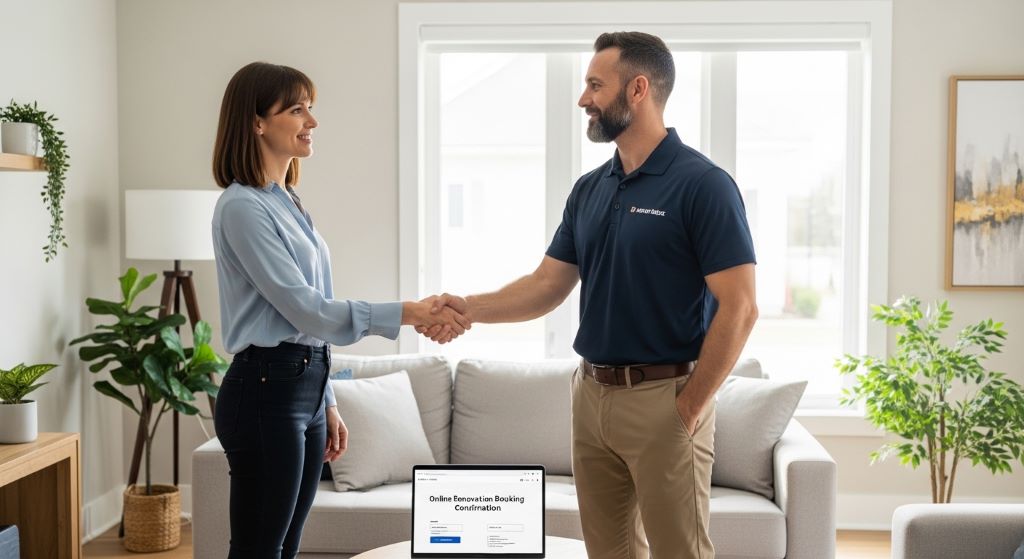
One of the best ways to convert a lead is to offer a free estimate. This removes the risk for the potential client. They get to meet you, ask questions, and see how you communicate. You get the chance to show your professionalism in person.
Make it easy to book this estimate. Add an online booking form to your website. Link to it in your emails and social media posts. The fewer steps it takes to schedule with you, the more people will follow through.
Use Retargeting Ads to Bring People Back
Most people visit a website and then leave without doing anything. Retargeting ads solve this problem. These ads follow people around the internet after they visit your site. They might see your ad on Facebook, on news websites, or in their email.
Retargeting keeps your name fresh in their mind. It reminds them to come back and book that estimate. These ads are typically cheap to run and very effective for contractors.
Follow Up Promptly and Professionally
Speed matters more than most contractors realize. Studies show that responding to a lead within five minutes makes you far more likely to win the job. If someone fills out your contact form, call or text them back immediately.
When you follow up, be friendly and professional. Ask about their project, confirm details, and suggest a time to meet. A fast, courteous response tells the client you are reliable. That impression carries weight when they are deciding who to hire.
How to Measure Your Funnel’s Performance
Building the funnel is only half the work. You also need to track how well it is performing. If you do not measure results, you cannot improve them.
Start with Google Analytics on your website. It shows you how many people visit your site, where they come from, and which pages they spend time on. Check these numbers every month.
Also track your conversion rate. Out of every one hundred people who visit your site, how many fill out a contact form? If that number is low, your website may need improvements. Additionally, track how many estimates turn into signed contracts. If that number is low, your follow-up process may need work.
Use this data to make small changes over time. Digital marketing is not a set-and-forget system. However, when you keep refining it, the results compound and grow steadily.
Conclusion
Building a sales funnel using digital marketing is one of the smartest investments a contractor can make. It gives you a reliable, repeatable system for attracting and converting clients. At the awareness stage, SEO, social media, and paid ads help people find you. In consideration stage, a strong website, email marketing, and video content keep them interested. At the decision stage, free estimates, retargeting ads, and fast follow-ups turn interest into income.
The process takes time to set up, but it pays off. Therefore, start with one or two strategies and build from there. Over time, your funnel will bring in a steady stream of qualified leads, so you can focus on doing the work you love.
Frequently Asked Questions
How long does it take to see results from a contractor sales funnel?
It depends on the strategies you use. Paid ads can bring leads within days. SEO and content marketing usually take three to six months to gain traction. However, once your funnel is running, results tend to improve over time.
How much should a contractor spend on digital marketing each month?
A good starting point is five to ten percent of your monthly revenue. For a small contractor, this might be two hundred to five hundred dollars per month. As you see results, you can increase your budget gradually.
Do contractors really need a website, or is social media enough?
Social media is helpful, but a website is essential. Your website gives you control over your brand, collects leads, and ranks on Google. Social media platforms can change their rules at any time, but your website belongs to you.
What is the best social media platform for contractors?
Facebook and Instagram are the most effective for most contractors. Facebook is great for reaching homeowners, while Instagram works well for showcasing visual work like renovations or landscaping. YouTube is also valuable for longer video content.
Can a contractor run digital marketing without hiring an agency?
Yes, absolutely. Many contractors manage their own digital marketing successfully. Free tools like Google Business Profile, Canva for graphics, and Mailchimp for email marketing make it very manageable. However, if your budget allows, hiring a local marketing professional can speed up your results.
Related Topics:
Food Van Business Plan for Single Operator Efficiency Planning
Preparing Home for Sale: Staging and Curb Appeal Tips
Sorry, the comment form is closed at this time.