


26 Jul Heavy Industrial Demolition Services: Ensuring Safety and Efficiency in Deconstruction
Introduction
Heavy industrial demolition is a discipline that requires not only technical expertise but also a profound commitment to safety and environmental responsibility. Structures such as factories, refineries, and processing plants present unique dangers, ranging from unstable architecture to the potential presence of hazardous materials. Investing in expert services ensures that every phase of deconstruction is controlled and compliant. One leading provider, BlueGrassBit Industrial Demolition, specializes in these demanding projects, combining modern techniques and steadfast safety protocols to deliver results that protect workers, communities, and the environment.
Prioritizing efficiency in industrial demolition is equally important. Careful project planning, advanced demolition tools, and transparent communication with all stakeholders can drive success from start to finish. This article details the strategies and technologies that shape today’s safest and most efficient industrial demolition projects.
Comprehensive Safety Planning
The backbone of any successful demolition project is an unwavering focus on safety. Before demolition begins, teams thoroughly assess each site to identify structural weaknesses, the presence of hazardous substances, and other risks. This includes examining blueprints and conducting on-site evaluations to develop a tailored safety plan.
Stringent adherence to Occupational Safety and Health Administration (OSHA) regulations is essential. Workers are equipped with personal protective equipment (PPE) suitable for the identified hazards, ranging from hard hats and respirators to full-body hazmat suits when necessary. Regular, scenario-based training keeps both veteran and new staff prepared for emergencies, reducing accidents and equipping crews to respond swiftly and effectively.
Advanced Demolition Techniques
The evolution of demolition methodologies has improved both safety and productivity. Selective demolition, also known as deconstruction, targets only specific sections for removal, which helps preserve adjoining structures and reduces waste. This approach is especially useful for phased renovations or when demolition occurs within operational plants.
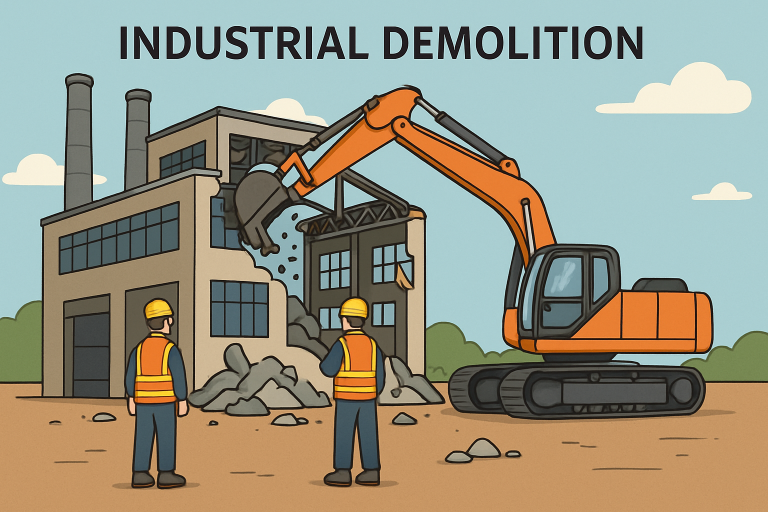
Mechanical demolition is the most common approach for large-scale projects. Excavators, loaders, and high-reach machines can efficiently dismantle reinforced concrete, steel, and masonry, minimizing manual labor. In particularly large or unstable structures, a controlled implosion may be considered, requiring comprehensive preparatory work and precision to avoid impacting nearby areas. Each technique is chosen based on site-specific demands, always prioritizing the safety of personnel and the public.
Utilizing Cutting-Edge Technology
Innovations in technology have revolutionized the field of industrial demolition. Remotely operated robotic demolition machines can access confined or hazardous spaces, reducing human risk and increasing speed. For example, automated cutters and breakers tackle the most challenging areas where manual intervention would be dangerous.
Drones equipped with high-definition cameras and thermal sensors provide operators with live aerial data, making it easier to inspect structures for weaknesses and monitor ongoing work. Detailed modeling using Building Information Modeling (BIM) software creates a digital twin of the structure, enabling teams to plan logistics, simulate demolition sequences, and predict structural reactions—ultimately streamlining the entire process from mobilization to final inspection.
Environmental Considerations
Heavy industrial demolition projects are often regulated by stringent environmental guidelines. Responsible contractors act promptly to identify and manage hazardous materials—such as asbestos, polychlorinated biphenyls (PCBs), and lead paint—to ensure safe removal and disposal. Advanced dust suppression systems, such as mist cannons and water sprays, reduce airborne particulates to protect onsite workers and surrounding neighborhoods.
A commitment to sustainability also means maximizing the recycling and reuse of construction materials. Salvaging steel beams, bricks, and concrete helps minimize landfill waste and reduces the overall carbon footprint. Proactive environmental strategies lead to more efficient projects while building positive relationships between demolition firms and the communities they serve.
Effective Waste Management
Managing demolition waste efficiently is both a regulatory requirement and a driver of project success. Segregating materials as they are removed enables their effective reuse, recycling, or safe disposal. Recyclable metals, clean wood, and concrete aggregates are sorted on-site, often with the help of specialized machinery and bins, in alignment with EPA guidelines on the sustainable management of construction and demolition materials.
Comprehensive waste management plans track every stage of the process, from site removal through to transportation and final processing. Partnering with vetted recycling facilities and waste processors strengthens compliance and guarantees responsible handling of even the most complex materials. Such strategies not only benefit the environment but can also offer cost savings that are passed on to the project’s stakeholders.
Community Engagement
Transparent and ongoing communication is crucial in industrial demolition, particularly when projects are located near residential or commercial developments. Early engagement with local authorities, neighborhood associations, and nearby businesses establishes clear expectations and provides avenues for feedback.
Sharing information about the project’s scope, timeline, and potential disruptions in advance reduces anxiety, while prompt and empathetic responses to community concerns foster trust. Demonstrating accountability throughout the demolition process ensures that all stakeholders—from public officials to private citizens—know that safety, compliance, and cooperation remain core priorities.
Conclusion
Large-scale industrial demolition is a high-stakes endeavor that demands expertise in planning, execution, and stakeholder communication. From robust safety protocols and modern demolition techniques to the integration of technology and environmental stewardship, each stage contributes to a successful outcome. By valuing transparent community relationships and diligent waste management, industrial demolition specialists deliver projects that protect people, preserve the ecosystem, and fulfill regulatory obligations.
Sorry, the comment form is closed at this time.