

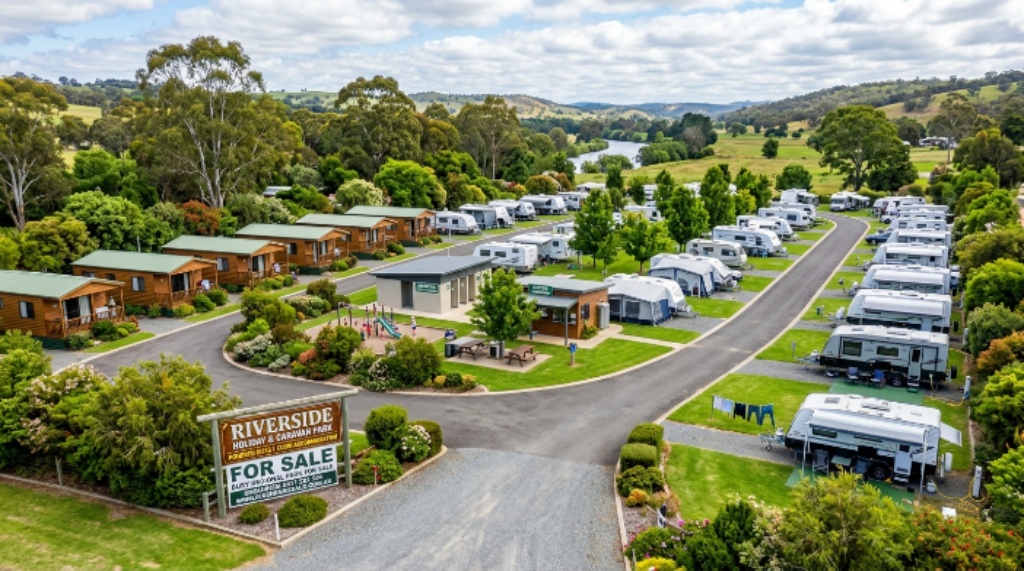
10 Aug Caravan and Camping Parks for Sale: What Buyers Need to Know Before They Invest
Few business investments combine lifestyle appeal with genuine income potential quite like owning a caravan or camping park. Australians alone took around 15.2 million caravan and camping trips in 2024, generating 57.1 million overnight stays, with over 90 percent of those nights in regional areas. Demand in the UK and parts of North America tells a similar story. Domestic tourism has strengthened the sector, and that has pushed quality parks into serious demand among buyers.
However, buying a park is not like buying a residential property. It is a trading business sitting on real estate, and the two cannot be separated when it comes to valuation, financing, or due diligence. Get this wrong, and a promising investment quickly becomes an expensive lesson. Get it right, and you can secure one of the most resilient, multi-income businesses available to private investors.
This guide covers everything you need to know before you commit.
Understanding the Different Types of Parks on the Market
Before you search any listings, you need to understand what you are actually buying. Not all parks operate the same way, and the ownership structure you choose affects everything from your borrowing capacity to your lifestyle.
The most common structures are freehold going concern and leasehold. A freehold going concern means you own both the land and the operating business outright. This model gives you full control, maximum financing options, and the benefit of land value growth over time. A leasehold arrangement means a long-term operator runs the park on land owned by someone else. Entry costs are lower, but your security is a diminishing lease with no underlying land asset.
There are also different park types by use. Touring parks accommodate caravans and tents on a short-stay basis. Residential parks house permanent or semi-permanent residents. Mixed parks combine both. Static caravan parks hold on-site units that owners purchase and return to each season. Holiday resort parks blend multiple categories with premium amenities.
| Park Type | Key Revenue Source | Typical Buyer Profile |
| Touring and camping | Nightly and weekly site fees | Lifestyle buyers, hospitality operators |
| Residential caravan park | Long-term site rent | Passive income investors |
| Static and holiday park | Site fees plus unit sales | Commercial operators |
| Mixed-use park | Multiple streams combined | Experienced hospitality investors |
Each structure has different risk and return profiles. Therefore, clarify your lifestyle goals, income expectations, and operational appetite before you look at a single listing.
How Parks Are Valued
This is the point where many first-time buyers get caught off guard. A park is valued on the business it generates, not simply the land and buildings it sits on.
Valuers take the adjusted net profit, which is the real earnings after legitimate addbacks, and apply a yield multiple that reflects factors like location, seasonality, occupancy, income mix, condition, and expansion potential. Two parks with identical annual revenue can land at very different valuations depending on those variables.
A park with strong year-round occupancy, diversified income streams, and modern infrastructure commands a tighter yield multiple, which means a higher price. A park that earns most of its income in a single peak season and shows deferred maintenance will attract a wider multiple and a lower price, but also carries higher risk.
According to transaction guidelines noted by the largest accounting firms 2026, buyers in Australia should expect to put in around 30 percent as a deposit on a freehold going concern and around 50 percent on a leasehold deal. These figures reflect how lenders view the two models. Freehold provides land as security. Leasehold does not.
The key number to request from any seller is the adjusted net profit, verified against bank statements and tax returns for a minimum of two to three years. Never rely on a seller-prepared profit and loss statement alone.

Due Diligence: What to Inspect Before You Sign
Due diligence on a park covers three distinct areas: the physical asset, the financials, and the legal and regulatory status. Skipping any of these areas is how buyers end up with expensive surprises after settlement.
Physical Inspection
Walk every road, inspect every amenity block, and examine the power, water, sewerage, and drainage systems in detail. Deferred maintenance is one of the most common silent killers in this sector. A park may look functional on a surface inspection but carry hundreds of thousands of dollars of infrastructure debt hidden in ageing septic systems, undersized electrical capacity, or deteriorating cabin stock. Check roads, pools, camp kitchens, laundry facilities, and any playground equipment for condition and compliance.
Financial Verification
Request three years of tax returns and cross-reference them with actual bank statements. Compare the current site rates to nearby competing parks and identify any gap between current rates and market rates. That gap can represent upside if it is below market, or a risk if the park is already priced above what the local market supports. Also examine the income mix carefully. Permanent site rent is contracted, stable income. Tourist site income is seasonal and sensitive to weather, fuel prices, and competing short-stay accommodation.
Look for these financial red flags before proceeding:
- Revenue that only holds in a single peak window
- Occupancy rates the seller cannot document
- Cabin or site pricing that assumes premium condition but is not supported by the asset
- Expense ratios below 35 percent, which often indicate deferred maintenance or unreported costs
Legal and Regulatory Checks
Instruct a solicitor and accountant before you make any commitment. Your solicitor should review the title, all planning permissions benefitting the park, the site licence and any conditions attached to it, occupancy agreements, and any existing bookings that will need to be honoured after settlement.
Budget for searches including local authority, water and drainage, environmental, and mining searches if the park sits near historic mine sites. In addition, confirm state or regional licensing requirements, building code compliance, and any accessibility obligations under current legislation.
If the park serves food or drinks, check food safety compliance separately. If you cannot verify it, assume it does not exist.
Red Flags That Should Make You Pause
Some listings are cheap for very good reasons. Here is a summary of the conditions that should either prompt a price renegotiation or a decision to walk away.
| Red Flag | What It Signals |
| Lease term is short or rent escalation is heavy | Limited upside, possible exit pressure |
| Occupancy only holds in one peak window | High seasonal cash flow risk |
| Council or planning constraints on expansion | Capped growth potential |
| Deferred maintenance visible on inspection | Hidden capital expenditure requirement |
| Revenue not evidenced by bank statements | Financials may be unreliable |
| Zoning inconsistencies or unresolved permits | Financing and legal risk |
| Septic or drainage at capacity | Major capital outlay likely |
If you find one red flag, negotiate accordingly. If you find three or more, exercise extreme caution before proceeding.
Financing the Purchase
Lenders approach parks as business acquisitions, not traditional property purchases. The going concern valuation, produced by a qualified commercial valuer, drives the loan size. If that valuation comes in below the asking price or contract price, the gap is yours to cover. This is why pressure-testing the numbers before you sign a contract matters so much.
Freehold going concern parks are generally easier to finance because the lender holds land as security. Leasehold purchases require a higher deposit and attract more conservative lending terms.
First-time buyers can secure funding for park acquisitions, but your background and experience matter more than they would in a standard commercial property deal. A track record in hospitality, tourism, or business management helps. Additionally, having clear working capital reserves beyond your deposit demonstrates to lenders that you can sustain operations through a seasonal trough or an unexpected repair.
In the US market, SBA 7(a) and 504 loans work for acquisitions up to certain thresholds, with specialist outdoor-hospitality lenders covering larger deals. In Australia and the UK, commercial lenders with specific experience in tourism and leisure businesses are the appropriate channel.

Income Streams and Growth Potential
One of the most appealing aspects of owning a park is the diversity of income it can generate from a single footprint. Powered sites, unpowered sites, cabins, self-contained units, laundry facilities, kiosks, pet fees, tour bookings, late checkout fees, and seasonal food and beverage all contribute to total revenue. Therefore, a well-run park has multiple levers available for revenue growth without requiring additional land.
Value-add opportunities worth evaluating when assessing any listing include:
- Bringing site rates up to market if they are currently below comparable parks
- Adding cabin stock or upgrading existing units to a premium tier
- Installing amenities such as Wi-Fi, a pool, or a playground to attract family bookings
- Converting short-stay sites to long-term or permanent tenure in undersupplied residential markets
- Adding online booking capability and digital marketing to boost occupancy in shoulder seasons
Conclusion
Buying a caravan and camping park is a complex but rewarding investment for buyers who do their homework. The sector benefits from resilient domestic tourism demand, multiple income streams, and genuine land value in desirable locations. However, the process demands more rigorous preparation than a standard property purchase. Understanding park structures and how valuations are calculated sets a solid foundation. Thorough physical, financial, and legal due diligence protects you from the most common and costly buyer mistakes. Watching for red flags around seasonality, deferred maintenance, and regulatory compliance saves money and disappointment. And securing finance through lenders who understand the park business, not just the real estate, ensures the numbers work from day one. With the right approach, caravan and camping parks for sale represent one of the most complete business and property investments available to private buyers today.
Frequently Asked Questions
What is the difference between freehold and leasehold when buying a caravan park?
Freehold means you own the land and the business outright. Leasehold means you operate the park on land owned by another party under a long-term lease agreement. Freehold offers more control, stronger financing options, and land value growth over time. Leasehold has a lower entry price but no underlying land asset and higher deposit requirements from lenders.
How are caravan and camping parks valued?
Parks are valued on the business they generate, not simply the physical assets. A commercial valuer takes the adjusted net profit and applies a yield multiple that reflects location, occupancy, condition, income mix, and expansion potential. This is known as a going concern valuation, and it drives both the asking price and the loan size a lender will offer.
What should I check during due diligence on a park?
Due diligence covers three areas. Physically, inspect all infrastructure including roads, power, water, sewerage, drainage, and amenity blocks. Financially, verify at least three years of tax returns and bank statements and compare site rates to local competitors. Legally, instruct a solicitor to check the title, site licence, planning permissions, occupancy agreements, and all regulatory compliance.
What are the biggest red flags to watch for when buying a park?
The most serious red flags include revenue that cannot be verified by bank statements, occupancy that only holds during a single peak season, heavy deferred maintenance, short lease terms with steep rent escalation, and unresolved planning, zoning, or sewerage issues. Two red flags are reason to negotiate hard on price. Three or more are reason to walk away.
Can a first-time buyer get finance to purchase a caravan park?
Yes, first-time buyers can secure finance, but lenders treat parks as business acquisitions rather than standard property purchases. Your professional background in hospitality, tourism, or business management improves your application. You will typically need around a 30 percent deposit for a freehold going concern and around 50 percent for a leasehold purchase, along with evidence of working capital reserves to cover operational costs and unexpected expenses.
Sorry, the comment form is closed at this time.