

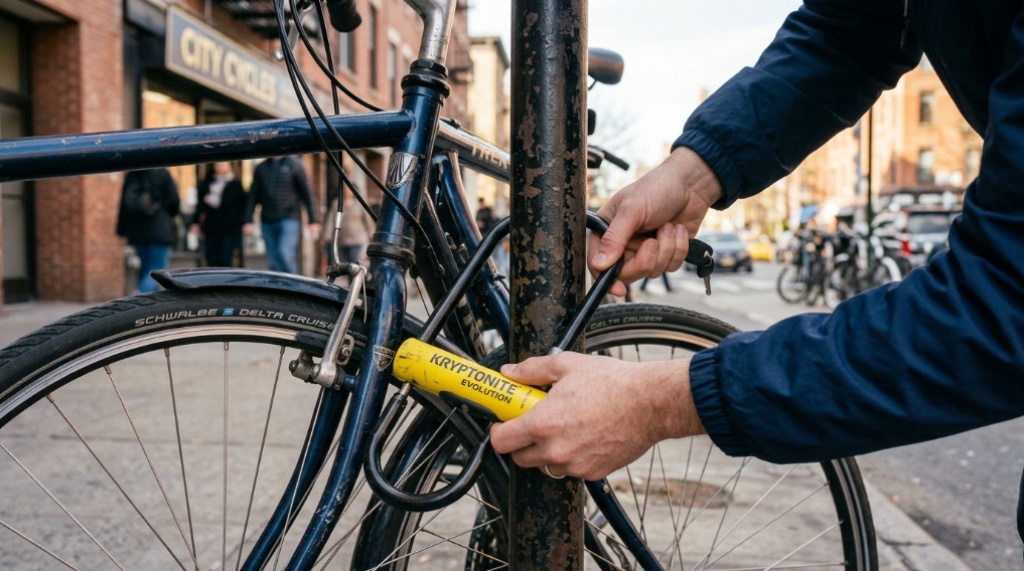
24 Sep How to Secure Your Bike When Parking It in Public
You lock your bike, walk into a store for ten minutes, and come back to find nothing but a cut cable and an empty rack. It happens every day, and not because thieves are unstoppable — usually it’s because a single shortcut made the bike easy to take. Securing a bike well comes down to three things: what you lock it to, what you lock it with, and how you position both. If you’re choosing gear for the first time, an Outdoor X Sports guide can help you compare lock types before you buy, but this article covers the full parking process from rack selection to removal.
Quick Answer
Lock your frame and at least one wheel to a fixed, immovable object using a hardened steel U-lock or a thick chain, and fill the empty space inside the lock as tightly as possible. Avoid locking to anything that can be cut, unbolted, or lifted over. Use a second lock or locking skewers for wheels and accessories, park in visible, well-lit areas, and take anything detachable with you. No setup is theft-proof; the goal is making your bike harder to take than the one next to it.
Key Takeaways
- Lock the frame first, then the wheels. A frame-only lock lets a thief walk away with everything else.
- Lock to something fixed and solid — a proper bike rack or a thick, anchored post — never to a sign pole, fence panel, or small tree.
- Fill the space inside the lock. A loose lock gives a thief room to fit a jack or pry bar.
- Two different lock types (for example, a U-lock plus a cable or chain) force a thief to carry two different tools and spend more time.
- Location matters as much as the lock. Well-lit, visible, high-traffic spots reduce the time a thief is willing to spend.
What Makes a Bike an Easy Target
Thieves are practical, not sentimental. They look for the bike that takes the least time and the least noise to steal. That means quick-release wheels, unlocked components, thin cables, and loose locking jobs get targeted first. A determined thief with an angle grinder can defeat almost any lock given enough time and privacy — so your real defense is making the job slow, loud, and awkward.
Think in terms of time and attention. A cable lock cut in seconds offers almost no resistance. A properly tensioned U-lock through the frame and a wheel, attached to a solid rack in a busy area, can take minutes of noisy work. Most thieves will move on rather than risk being seen, Once you have mastered locking your bike safely for urban commutes, you might also want to practice advanced trail techniques by learning how to jump gaps on a mountain bike.
Choosing What to Lock Your Bike To
The anchor point matters as much as the lock. A perfect lock on a weak post fails just as fast as a weak lock on a perfect post.
Good anchor points:
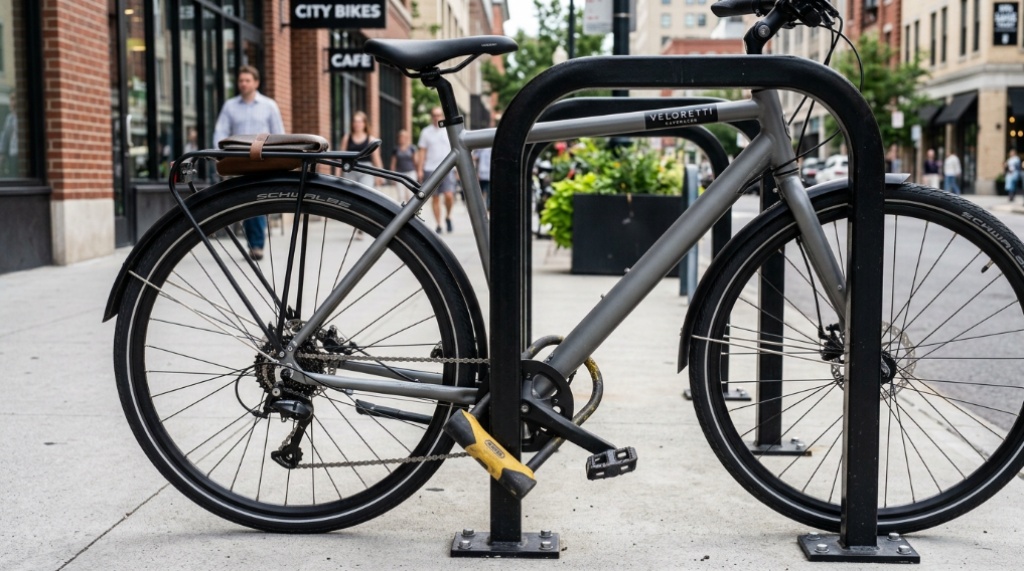
- Inverted-U or staple bike racks that are bolted to the ground
- Thick steel posts or bollards set into concrete
- Heavy, immovable railing with no exposed bolts
Poor anchor points:
- Sign poles — often thin and sometimes unbolted at the base
- Fence panels and wooden posts — easily cut or unscrewed
- Small trees — damaging, and trivially cut
- Anything your lock can be lifted over the top of, including short parking meters
If a pole is tall and smooth with nothing to slide the lock over, it can work. If the lock can be lifted off the end, it’s useless. Also check that the rack itself isn’t loose — some racks can be unbolted from their base in under a minute.
How to Lock Your Bike: Step by Step
- Position the bike close to the anchor. Extra distance lets a thief use the lock as a lever or fit tools into the gap.
- Remove quick-release parts. Take the front wheel, seat post, or lights with you if they detach easily.
- Pass the lock through the frame and a wheel. The rear wheel is usually more expensive and harder to remove, so prioritize it if you can only secure one.
- Attach to the anchor and close the shackle. Make sure the lock isn’t resting on the ground, where it can be struck with a hammer.
- Fill the empty space. Push the shackle as far through as possible so there’s no room for a jack or pry bar.
- Add a secondary lock if you have one. Use it for the second wheel or to secure the frame to the primary lock.
- Double-check the lock is actually engaged. Tug it once. A surprising number of thefts happen because a lock wasn’t fully closed.
U-Lock vs Chain vs Cable: What Actually Works
Each lock type trades weight and convenience against resistance to cutting. There’s no single best option — the right choice depends on where you park and how long you leave the bike.
| Lock Type | Cutting Resistance | Weight | Best For |
|---|---|---|---|
| Hardened steel U-lock | High against bolt cutters; vulnerable to angle grinders | Moderate | Short to medium stops in higher-risk areas |
| Thick chain lock | High; harder to attack with a grinder than a fixed shackle | Heavy | Longer parking, locking to awkward anchors |
| Cable lock | Low; cut in seconds with basic tools | Light | Secondary security, low-risk areas, quick stops |
| Folding lock | Moderate; riveted joints can be drilled | Moderate | Commuting where portability matters |
The practical takeaway: a U-lock or thick chain should be your primary lock if the bike is out of sight for more than a few minutes. A cable works as a secondary lock for wheels, but rarely as a primary one in any area with real theft risk.
Where You Park Changes Everything
Lock choice is only half the equation. Placement determines how much time a thief is willing to spend.
Prefer spots that are:
- Well-lit, including at night
- Visible from inside a building or from a busy path
- Near other locked bikes, since crowded racks offer more cover for you and more targets for thieves
- Covered so the lock mechanism doesn’t seize in rain or freeze
Avoid parking overnight on the street if you can help it. Overnight is when thieves work with patience and power tools, and almost no portable lock survives a determined, unhurried attack. If you must leave a bike outside regularly, consider keeping a heavy chain at the location and only carrying a lighter lock with you.
Common Mistakes That Get Bikes Stolen
Most thefts come down to small, fixable errors. Watch for these:
- Locking only the wheel. A thief removes the wheel, leaves it locked, and takes the frame.
- Locking only the frame. Quick-release wheels disappear in seconds.
- Using a cable as your only lock. A pair of cutters ends the job in under ten seconds.
- Leaving the lock loose. Slack allows a jack or lever to break the shackle.
- Locking to a lift-able anchor. If the lock slips over the top of the post, the bike is free.
- Forgetting accessories. Lights, computers, saddlebags, and even saddles with quick-release bolts walk away fast.
What to Do if Your Bike Is Stolen
Act quickly. Report the theft to the police and get a case number — some insurers require it, and it helps if the bike turns up. Register the loss on a stolen-bike database if one operates in your area. Check local secondhand marketplaces and pawn shops in the days after the theft, since stolen bikes are often resold fast. If you have the serial number and a photo, include both in your report; without them, recovery is much harder. This is also the best argument for recording your bike’s serial number now, before anything happens.
Frequently Asked Questions
Is a cable lock enough to secure a bike in public?
For a quick stop in a low-risk, visible area, a thick cable can work as a secondary lock. As your only lock in a public place, it is weak — most cables can be cut in seconds with basic hand tools. Use a U-lock or chain as your primary lock and treat cables as extra protection for wheels or accessories.
Should I lock my bike by the frame or the wheel?
Lock the frame first, since it’s the most valuable and hardest part to replace. Then secure at least one wheel — ideally the rear, which is usually more expensive and harder to remove. If you can only make one connection, pass the lock through the frame and one wheel at the same time.
How long does it take a thief to break a U-lock?
It depends entirely on the tool. A quality hardened steel U-lock resists bolt cutters but can be defeated by an angle grinder in a minute or two, depending on the lock and the blade. The goal isn’t making the lock unbreakable; it’s making the attempt slow and loud enough that a thief chooses a different bike.
Can I lock my bike to a tree or sign pole?
You can physically do it, but neither is a good anchor. Thin sign poles can be lifted over or unbolted, and trees can be cut or damaged. Lock to a fixed, solid object like a bolted bike rack or a thick bollard set in concrete.
What’s the best way to protect my wheels and seat?
Use locking skewers or security bolts to replace quick-release hardware, so wheels and seat posts need a special tool to remove. If you don’t want to replace the hardware, carry a second lock or cable and thread it through the wheels, frame, and seat. For quick stops, simply take removable accessories with you.
Is it safe to leave a bike locked outside overnight?
Generally no. Overnight parking gives thieves privacy and time, and almost no portable lock survives an unhurried attack with power tools. If overnight storage is unavoidable, use a heavy chain stored at the location, park in a well-lit spot, and accept that the risk is much higher than daytime parking.
Conclusion
Securing a bike well isn’t about buying the most expensive lock — it’s about removing the easy options. Lock the frame and at least one wheel to a solid, immovable anchor, fill the space inside the lock, and use a second lock or locking hardware for anything detachable. Choose well-lit, visible spots, and avoid overnight street parking when you can. Do those things consistently and you’ll make your bike a much less attractive target than the one parked next to it.
Sorry, the comment form is closed at this time.