


14 Sep How to True a Bicycle Wheel at Home
The first time my bike wheel went out of true, I panicked. I had hit a pothole on my commute home, and suddenly my wheel wobbled with every rotation. I was tempted to take it straight to the bike shop, but I decided to try fixing it myself. That decision saved me time and money, and it gave me a new skill that has come in handy many times since. Learning to true a bicycle wheel at home is easier than you might think, and it is a valuable ability for any cyclist.
A wobbly wheel is not just annoying; it can also damage your bike and affect your ride. It can cause uneven tire wear, brake rub, and extra stress on your spokes and hub. Fixing it at home means you can get back on the road faster and avoid the hassle of a trip to the shop. For me, truing my first wheel was a game-changer. It gave me the confidence to handle minor bike issues on my own and deepened my understanding of how my bike works.
Why Learning to True a Bicycle Wheel at Home is Worth It
One of the biggest benefits of learning to true a bicycle wheel at home is the cost savings. Bike shop labor can add up, especially for something as simple as a minor wobble. With a spoke wrench and a little know-how, you can fix most wheel issues yourself. This skill also saves you time. Instead of waiting for an appointment or traveling to the shop, you can address the problem immediately and get back to riding.
Another advantage is the convenience. Whether you are on a long ride far from home or just notice a wobble during your daily commute, knowing how to true a wheel means you can fix it on the spot. This is especially useful for mountain bikers or tourers who might not have easy access to a bike shop. For me, being able to true a wheel at home has meant fewer interruptions to my riding schedule and more time on the trail.
Finally, learning to true a wheel gives you a deeper understanding of your bike. You will gain insight into how the spokes, rim, and hub work together to create a strong, straight wheel. This knowledge can help you maintain your bike better and spot potential issues before they become serious problems. It also gives you the satisfaction of knowing you can handle basic repairs yourself. For me, this skill has made me a more confident and self-sufficient cyclist.
Understanding the Tools You Need for Wheel Truing
The most essential tool for truing a bicycle wheel is a spoke wrench. Spoke wrenches come in different sizes to fit the various spoke nipple sizes. Most bikes use a #0, #1, or #2 spoke wrench, but it is important to check your specific wheel. A multi-sized spoke wrench is a good investment, as it will work with most wheels. You can find these at any bike shop or online retailer.
A truing stand is another helpful tool, but it is not strictly necessary. A truing stand holds the wheel in place and provides a reference point to measure the wobble. If you do not have a stand, you can use your bike’s fork or frame as a reference. Simply mount the wheel in the fork or frame and use a zip tie or string as a guide to see where the rim moves out of alignment.
Other useful tools include a marker or tape to mark the wobble, and a dish wheel gauge if you want to check the wheel’s dish (the centering of the rim over the hub). However, for most basic truing jobs, a spoke wrench and a reference point are all you need. For me, starting with just a spoke wrench and my bike’s fork was enough to get the job done.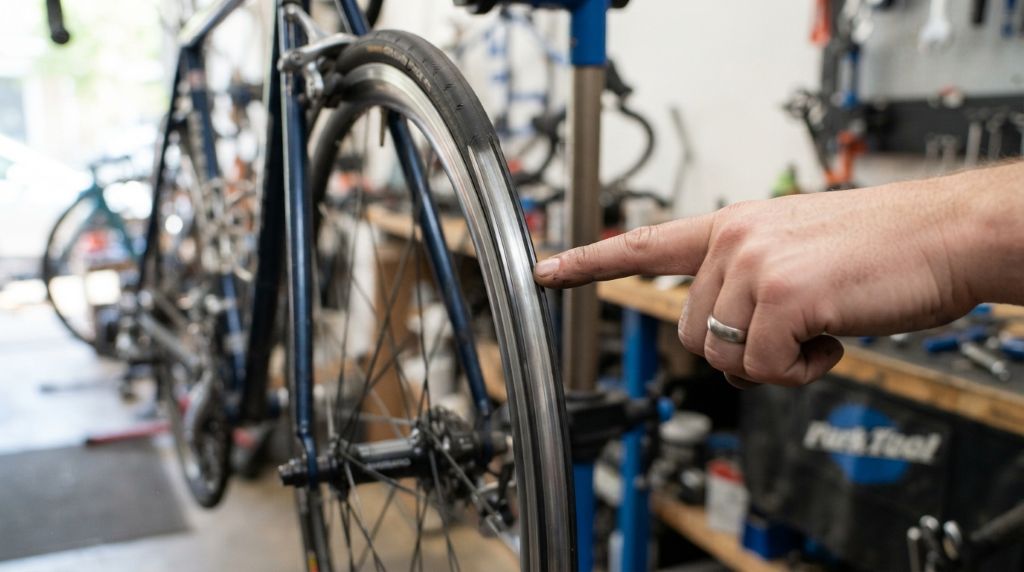
Step-by-Step Guide to Truing a Bicycle Wheel at Home
First, remove the wheel from your bike. If you have a quick-release skewer, this is a simple process. For through-axle wheels, you will need an Allen key. Once the wheel is off, mount it in your truing stand or back in the bike’s fork or frame. Spin the wheel and identify the wobble. Use a zip tie or string attached to the fork or stand as a reference point. Watch where the rim moves closest to or farthest from the reference point.
Next, locate the spokes near the wobble. If the rim bends to the left, you will need to tighten the spokes on the right side of the wheel. If it bends to the right, tighten the spokes on the left side. Use your spoke wrench to turn the spoke nipple a quarter turn at a time. After each adjustment, spin the wheel again to check your progress. Be patient, as it may take several small adjustments to get the wheel straight.
If the wobble is severe, you may need to loosen the spokes on the side of the bend as well. This helps balance the tension across the wheel. Always make small adjustments and check frequently. For radial wobbles, where the rim moves up and down, adjust the spokes on the top or bottom of the wheel as needed. I once spent a couple of hours truing my first wheel, and the satisfaction of seeing it spin straight was well worth the effort.
Common Wheel Truing Problems and How to Fix Them
One common problem is a wheel with multiple wobbles. If your wheel has several areas that are out of true, address one wobble at a time. Start with the largest wobble and work your way to the smaller ones. This approach prevents you from overcorrecting and creating new wobbles while trying to fix existing ones.
Another issue is a wheel that will not stay true. If you adjust the spokes but the wobble keeps coming back, it might be due to uneven spoke tension. Check the tension of all the spokes by plucking them like guitar strings. They should all produce a similar tone. If one spoke sounds noticeably different, it may need adjustment. For me, learning to check spoke tension helped me achieve a more stable and true wheel.
If you are dealing with a severely bent wheel, it may be best to take it to a professional. A wheel that is badly out of true might require more advanced tools or techniques to fix properly. However, for most minor wobbles, a spoke wrench and a little patience are all you need. I once had a wheel that was so bent I thought it was beyond repair, but with careful adjustment, I was able to true it enough to ride safely home.
Finally, if you notice that your wheel keeps going out of true, it might be a sign of a larger issue. This could be due to a damaged rim, broken spokes, or a problem with the hub. In these cases, it is best to consult a professional bike mechanic. For me, recognizing when a problem is beyond my skill level has saved me from causing further damage to my bike.
Tips for Maintaining a True Wheel and Preventing Future Issues
Regular inspections are the best way to keep your wheel true. After every ride, give your wheel a quick spin to check for wobbles. If you notice a small wobble, address it early before it becomes a bigger problem. This is especially important after riding on rough terrain or hitting potholes, as these can knock your wheel out of alignment.
Proper spoke tension is also key to maintaining a true wheel. Over time, spokes can lose tension, which can lead to wobbles and affect your bike’s stability, especially when riding at higher speeds. If you’re curious about how speed can affect your bike’s performance, you can also learn more about How fast can road bikes go?. Check your spoke tension regularly by plucking the spokes like guitar strings. They should all produce a similar tone. If one spoke sounds noticeably different, it may need adjustment. For me, checking spoke tension has become a regular part of my bike maintenance routine.
Finally, avoid impacts that can bend your wheel. This means being cautious when riding over rough terrain, potholes, or curbs. If you do hit something hard, stop and check your wheel for damage. Even a small impact can cause a wobble that will only get worse if left unaddressed. If you are unsure about fixing a wobble yourself, do not hesitate to take your bike to a professional. However, for most minor issues, a little knowledge and a spoke wrench are all you need.
FAQs
How do I know if my bicycle wheel needs truing?
If your wheel wobbles side to side or up and down as it spins, it needs truing. You can check this by spinning the wheel and watching the gap between the rim and the brake pads or frame.
Can I true a bicycle wheel without a truing stand?
Yes, you can use your bike’s fork or frame as a reference point. Attach a zip tie or string to the fork or frame to help you see where the rim moves out of alignment.
How tight should the spokes be when truing a wheel?
Spokes should be tight enough to keep the wheel straight but not so tight that they risk breaking. Turn the spoke nipple a quarter turn at a time, and check the wheel’s alignment after each adjustment.
What should I do if my wheel is severely bent?
If your wheel has a large wobble or is significantly out of shape, it may be best to take it to a professional bike shop. They have the tools and experience to true the wheel safely and effectively.
How often should I check my bicycle wheel for truing?
Check your wheel for wobbles after every ride, especially if you have ridden on rough terrain. Address any small wobbles early to prevent them from becoming bigger problems.
Conclusion
Truing a bicycle wheel at home is a valuable skill for any cyclist. It saves time, money, and frustration, and it keeps your bike running smoothly. With a spoke wrench and a little practice, you can fix most minor wobbles on your own. The key is patience and attention to detail. Small adjustments can make a big difference in how your wheel performs.
Do not let a wobbly wheel ruin your ride. Next time you notice a wobble, try these steps and see how well they work for you. If you have your own tips or stories about truing bicycle wheels, share them in the comments below. Your experience could help another cyclist in need. Happy riding!
Sorry, the comment form is closed at this time.