


17 Feb How Consistent Daily Routines Improve Your Dog’s Wellbeing
Key Takeaways
- Consistent routines reduce anxiety and encourage positive behaviors.
- Regular schedules for meals, exercise, and mental engagement are crucial for canine health.
- Structured plans can and should flex to fit your dog’s unique needs.
For every dog owner, ensuring the joy and health of your four-legged companion is a daily priority. One of the simplest yet most powerful ways to support your dog’s happiness and longevity is to establish a regular routine. Predictable schedules help regulate your dog’s internal clock, promote consistent behavior, and reduce stress and anxiety. The power of a routine goes far beyond surface-level obedience, shaping a positive environment your dog can trust and thrive in. Discover insights and resources to build routines with Wagmore and start empowering your pet today.
Predictability breeds comfort and allows your dog to anticipate the flow of each day. From set feeding times to scheduled walks and dedicated play, structure enables your dog to relax, learn, and play with confidence. When expectations are clear, dogs feel secure and display more balanced energy. These benefits range from puppies learning the basics to senior dogs adjusting to changes in their environment or routines, highlighting the crucial role of consistency at every stage.
Beyond your dog’s individual environment, studies show that dogs are comforted by structure just like people. According to the American Kennel Club, routines improve canine quality of life by supporting predictable emotional states and physical health. Even minor disruptions can cause behavioral issues or anxiety in some dogs. A thoughtful approach to daily structure lays a foundation for better manners and overall happiness, making daily life easier for both the dog and the owner.
While every pup is unique, creating a personalized care routine benefits all dogs, especially those prone to nervousness or rescue pets acclimating to a new home. Maintaining reliability in basic needs fosters trust and speeds adaptation, supporting a harmonious household.
The Importance of Routine for Dogs
Having a daily rhythm helps dogs adapt to family life and the world around them. Dogs experience the world differently, often relying on cues from their environment and their humans to feel safe. Repetition and routine are fundamental for forming habits that underpin good behavior and relaxation. When dogs know what to expect, they react more calmly to new events and are less likely to develop behavioral issues. In times of change, such as a move or a new family member, the comfort of routine can prevent fear-based responses or negative habits from taking root.
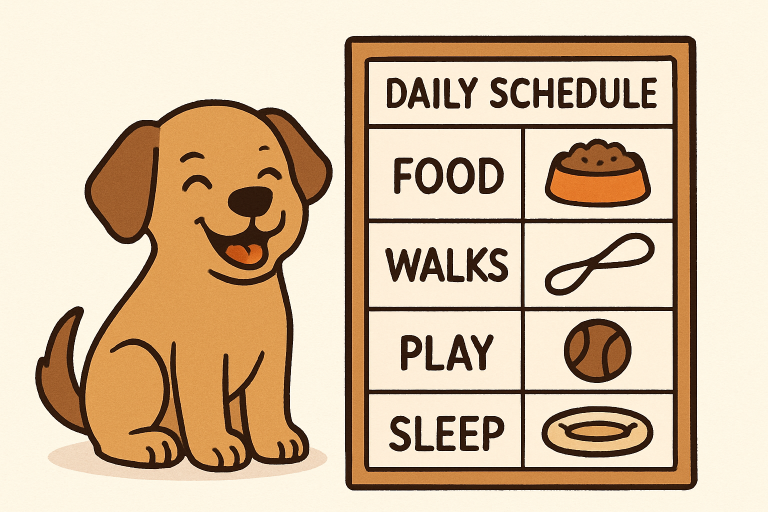
Key Elements of a Daily Routine
Feeding Schedule
Feeding your dog at the same time each day is fundamental for proper digestion, metabolism, and weight control. Consistency also provides opportunities for positive training with healthy treats, reinforcing good behavior. Adjusting food portions to fit your dog’s age, size, and activity level ensures balanced nutrition and prevents overeating.
Exercise Routine
Regular physical activity is essential for burning excess energy, keeping your dog fit, and reducing behavioral issues such as chewing or excessive barking. Most dogs benefit from at least 30 to 60 minutes of exercise per day, split between structured walks, play, and enrichment activities tailored to breed, age, and energy level.
Mental Stimulation Activities
Incorporate mentally stimulating tasks into your routine to keep your dog intellectually challenged. Activities such as puzzle feeders, scent games, and training sessions work to prevent boredom and destructive behaviors. Mental stimulation is important for all breeds, not just highly energetic or working dogs.
Sleep and Rest Times
Just like people, dogs thrive when they have set times to rest and sleep. A regular bedtime routine, such as dimming the lights or playing soothing music, can signal the end of the day and aid a more restful sleep. Dogs usually need between 12 to 14 hours of sleep per day, depending on their age and health.
Benefits of a Consistent Routine
Reduces Anxiety
Knowing when to expect food, bathroom breaks, or alone time allows your dog to feel more in control and less anxious. Routine reduces the likelihood that unexpected stressors will trigger undesired behaviors and helps manage anxiety around separations or new experiences.
Builds Confidence
Dogs develop confidence when their environment is predictable and secure. Familiar patterns encourage them to explore more, engage with their families, and respond positively to training.
Supports Emotional Stability
Routines help regulate a dog’s mood and prevent the highs and lows that can come from erratic schedules. Emotional stability supports both behavior and physical well-being, particularly in multi-pet households or homes with children.
Implementing a Routine
Begin by observing your dog’s natural tendencies. Note when they seem hungry, active, or sleepy, and gently build your daily plan around these rhythms. Gradually introduce consistency in feeding, walks, play, and sleep, being mindful of your dog’s changing needs over time. While structure brings benefits, some flexibility is key for holidays and special circumstances to keep your plan sustainable and stress-free for everyone involved.
Final Thoughts
Building a daily routine is one of the most effective steps any dog owner can take toward improving a pet’s quality of life. By providing consistent feeding times, exercise, and enrichment, you create a secure foundation where your dog feels loved and confident. Reducing anxiety, promoting better behavior, and supporting lasting emotional health are all achievable through consistency in your household activities. A well-structured daily schedule is a gift that keeps giving for both you and your canine companion.
Sorry, the comment form is closed at this time.