

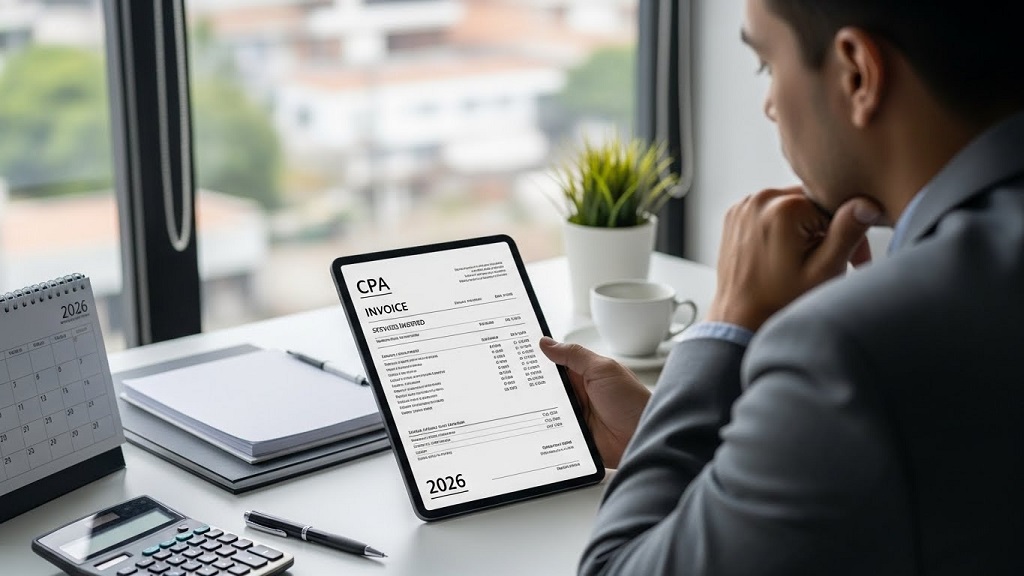
04 Jan How Much Does a CPA Cost for a Small Business in 2026?
The average CPA cost for small business owners in 2026 ranges from $1,500 to $5,000 per year for ongoing services, while one-time tasks like tax filing or setup can cost $300 to $3,000+, depending on complexity.
If you run a small business, CPA pricing can feel unclear. One firm quotes $300. Another quotes $3,000. Both claim to offer “full service.” This gap creates hesitation. And hesitation leads to costly mistakes.
This guide breaks down real-world small business CPA fees using current data, practical examples, and case-based insights. You’ll learn what you should pay, why prices vary, and how to choose a CPA without wasting money.
The goal is simple. Help you make a confident, informed decision in 2026.
Why Do Small Businesses Struggle to Understand CPA Pricing?
Direct answer: CPA pricing varies because services, business size, transaction volume, and risk exposure are different for every business.
This is the core problem. Small business owners often expect fixed prices. But CPAs don’t sell products. They sell time, expertise, and risk reduction.
Two businesses with the same revenue can pay very different fees.
- One sells digital services with 20 invoices a month
- The other runs a retail store with payroll, inventory, and sales tax in multiple states
Same revenue. Different workload. Different liability.
According to industry surveys from accounting associations and firm disclosures, CPAs spend 30–50% more time on compliance-heavy businesses than service-based ones. That time directly affects CPA pricing.
What Services Are Included in Small Business CPA Fees?
Quick answer: CPA fees usually cover tax filing, compliance, advisory, and financial accuracy—not just bookkeeping.
Many owners confuse bookkeepers and CPAs. They are not the same.
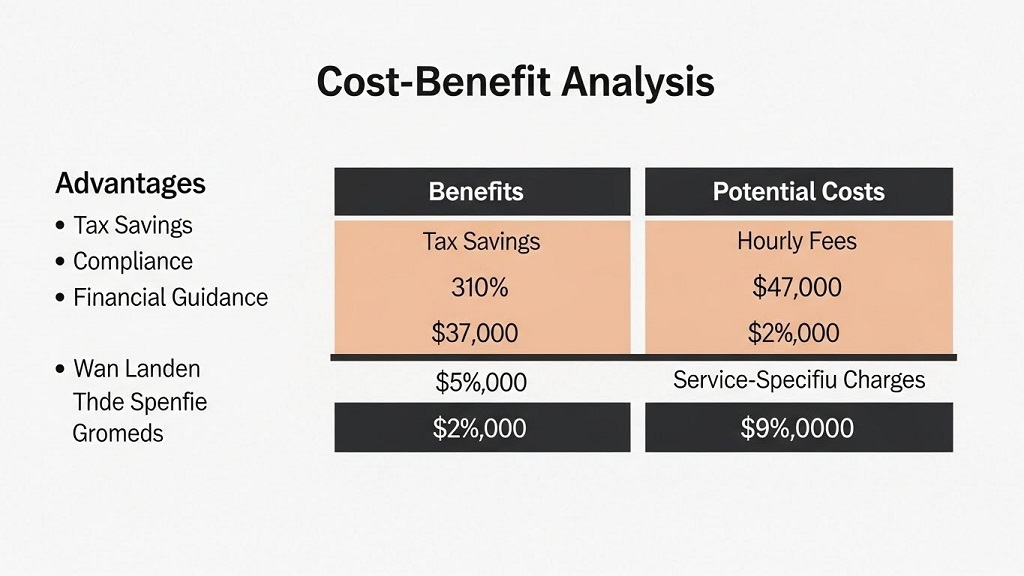
Core CPA Services for Small Businesses
- Business tax preparation and filing
- Quarterly estimated tax planning
- Financial statement review
- IRS notices and audit support
- Entity structure advice (LLC vs S-Corp)
- Depreciation and expense optimization
Bookkeeping may be included, but often it’s a separate line item.
That distinction matters. Because when comparing CPA cost for small business owners, you must compare scope, not price alone.
How Much Does a CPA Cost for Tax Preparation Only?
Short answer: Small business tax preparation costs range from $300 to $1,500+ per year.
Tax-only services are common for early-stage businesses. Pricing depends on the form complexity.
| Tax Return Type | Average CPA Fee (2026) |
|---|---|
| Schedule C (Sole Proprietor) | $300 – $600 |
| Partnership (Form 1065) | $700 – $1,200 |
| S-Corporation (Form 1120-S) | $900 – $1,500+ |
Case insight: A U.S.-based freelance agency earning $180,000 annually paid $450 for Schedule C filing in 2025. After switching to an S-Corp, CPA fees increased to $1,100—but saved over $7,800 in self-employment taxes.
Cost increased. Net savings improved.
What Is the Monthly CPA Cost for Small Businesses?
Direct answer: Monthly CPA services typically cost $150 to $500+ per month.
Monthly pricing is now the most common CPA pricing model in 2026. Firms prefer predictable revenue. Clients prefer predictable costs.
What Monthly CPA Packages Usually Include
- Monthly financial review
- Quarterly tax estimates
- Email or call support
- Compliance reminders
Some packages include bookkeeping. Others integrate with software like QuickBooks.
Data from mid-size CPA firms shows businesses using monthly CPA services are 27% less likely to receive IRS penalty notices compared to annual-only clients.
How Does Business Size Affect CPA Pricing?
Short answer: The bigger and more complex the business, the higher the CPA cost.
| Business Size | Typical Annual CPA Cost |
|---|---|
| Solo owner / Freelancer | $300 – $1,000 |
| Small team (2–10 employees) | $1,500 – $3,500 |
| Growing business (10–50 employees) | $3,500 – $7,000+ |
Payroll alone adds workload. Each payroll cycle affects filings, withholdings, and reporting.
CPA pricing reflects that risk and time commitment.
Is Hiring a CPA Worth the Cost for a Small Business?
Clear answer: Yes, when the CPA helps reduce tax liability and compliance risk.
This is where many owners hesitate. CPA fees feel like an expense. But the real question is return.
Real Case Example
A retail business in Texas earning $420,000 annually paid $4,800 per year for CPA services. The CPA:
- Identified missed depreciation deductions
- Corrected sales tax reporting errors
- Restructured the entity
Total tax savings: $14,200 in one year.
The CPA did not “cost” $4,800. They returned value.
What Factors Increase Small Business CPA Fees?
Short answer: Complexity, risk, and poor records increase CPA pricing.
- Multiple revenue streams
- Inventory tracking
- Multi-state sales tax
- Late or disorganized books
- Prior-year filing errors
Clean records reduce CPA time. Messy records increase it.
This is why two businesses with the same revenue can receive very different quotes.
How Can Small Businesses Reduce CPA Costs Without Risk?
Direct answer: Preparation and clarity lower CPA fees.
Cost-Control Strategies That Work
- Use accounting software consistently
- Separate personal and business expenses
- Reconcile accounts monthly
- Ask for flat-fee pricing
Firms report clients who maintain clean books spend 20–40% less on CPA services annually.
What’s the Difference Between CPA Pricing and Online Accounting Services?
Short answer: CPAs offer licensed accountability. Software does not.
Online tools help with data entry. CPAs provide judgment, compliance, and legal responsibility.
If the IRS audits you, software doesn’t show up. Your CPA does.
How Should You Choose the Right CPA in 2026?
Direct answer: Choose based on industry experience and clarity, not the lowest price.
- Ask about similar clients
- Request service breakdowns
- Confirm communication frequency
- Understand what’s excluded
Transparent CPA pricing signals professionalism.
Conclusion: What Should You Expect to Pay a CPA in 2026?
The CPA cost for small business owners in 2026 is not one-size-fits-all. Most will pay between $1,500 and $5,000 annually for ongoing support. Some will pay less. Others will pay more.
The real cost isn’t the invoice. It’s the risk of errors, penalties, and missed savings.
A good CPA doesn’t just file forms. They protect your business.
Call to Action: If you’re unsure what level of CPA support your business needs, start with a consultation. Ask for clear pricing. Compare value, not just cost. Your future cash flow depends on it.
Frequently Asked Questions About CPA Cost for Small Business
How much does a CPA cost for a small business per year?
Most small businesses pay between $1,500 and $5,000 annually, depending on services and complexity.
Are CPA fees tax-deductible?
Yes. CPA and accounting fees are generally deductible as ordinary business expenses.
Is a CPA better than a bookkeeper?
They serve different roles. CPAs handle tax strategy and compliance. Bookkeepers handle daily records.
Can a CPA help reduce taxes legally?
Yes. Strategic planning, entity selection, and deductions often lower total tax liability.
Do online CPAs cost less?
Sometimes. But pricing depends on service depth, not location.
When should a small business hire a CPA?
Once revenue grows, taxes become complex, or compliance risk increases.
Is monthly CPA pricing better than hourly?
Monthly pricing offers predictability and ongoing support, which many businesses prefer.
Related Topics: Privacy and Safety in Modern Healthcare Spaces
Related Topics: Dental Implants: Modern Techniques and Lifelong Benefits
Sorry, the comment form is closed at this time.