

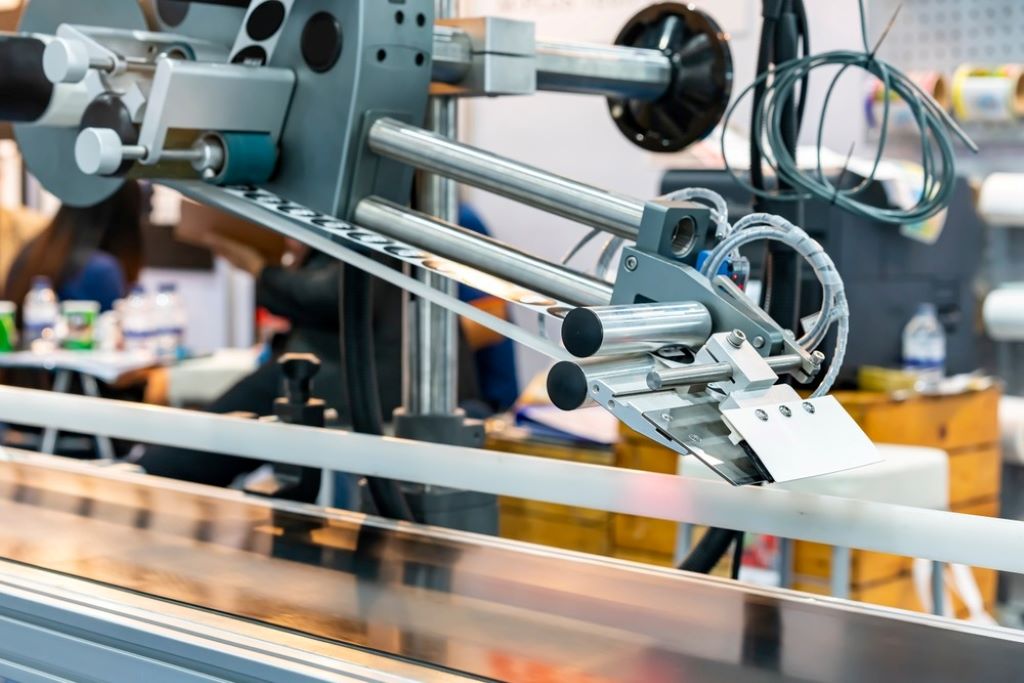
14 Jun Choosing the Right Label Applicator for Your Production Line
The Role of Label Applicators in Modern Production
Labeling is critical in any production or packaging line, impacting branding, compliance, and even the consumer’s first impression. With competition intensifying and regulations increasing, more brands seek a solution that stands out while remaining accurate and consistent. Label applicators are the machines that make this seamless process possible, applying labels at high speed and with a precision that manual methods can’t achieve. Making the right choice here supports a prime label or packaging for a consumer product from the first unit to the millionth.
As production lines become more advanced, label applicators become increasingly indispensable. They help reduce bottlenecks, support product traceability, and minimize human error, crucial across sectors like food, pharmaceuticals, and personal care. The move toward greater automation and digitalization in labeling is part of a broader shift seen throughout the manufacturing industry, reflecting the importance of reliable, scalable systems for growth and adaptation.
Types of Label Applicators Explained
Label applicators are not one-size-fits-all. The three main types are pressure-sensitive, glue-based, and shrink-sleeve applicators. Pressure-sensitive models are the most versatile, handling various label types and product shapes, and are commonly found in packaging operations that require flexibility. Traditional glue-based (or wet glue) applicators are ideal for high-speed applications where paper labels, such as bottling, are standard. Shrink-sleeve applicators meet the needs of products that require 360-degree coverage and are often used for unique container shapes in the beverage and health industries.
Each applicator type serves a specific niche. Choosing the wrong model can result in increased downtime, wasted materials, or poor label alignment. It’s important to evaluate label material, application surface, and production speeds before investing, as this ensures a solution that meets current needs and can evolve with future demands.
Matching Applicators to Product and Speed Requirements
Production lines differ widely, so labelers must be matched to product characteristics like shape, size, and surface material. Flat, rigid surfaces often pair well with automatic wipe-on or tamp applicators, whereas oddly shaped bottles may require rotary or air-blow systems for reliable labeling. Line speed is another crucial factor; high-volume producers will benefit from high-speed applicators with automated sensors and quality control, while smaller batch operations might prioritize flexibility and ease of changeover.
A mismatch between applicator speed and the rest of the line can lead to bottlenecks or increased error rates. Industry standards now favor modular systems, allowing equipment upgrades without overhauling the entire line. This approach not only supports current throughput but can scale as demand grows.
Advantages of Automation in Labeling
Automation has brought transformative advantages to the labeling process. Automated labelers integrate with sensors, control software, and network systems, offering real-time monitoring and instant adjustments for label placement and line speed. This dramatically reduces human error, cuts labor costs, and improves consistency—a must for regulated industries.
According to recent data from Packaging Digest, the demand for flexible, automated labeling has surged as companies face the dual challenge of increasing SKUs and shrinking order sizes. Advanced label applicators help companies adapt quickly to shifting market requirements and regulatory changes, reducing waste through improved first-pass yield.
Important Considerations When Selecting an Applicator
Choosing a label applicator starts with a comprehensive analysis of product range, label material, and available floor space. Understanding the durability of the labeling system—how it handles daily wear, operator use, and maintenance—can be the difference between years of trouble-free operation and costly downtime. Integration with existing machinery and software is equally important, ensuring seamless communication and minimal workflow disruption.
It’s advisable to look for applicators with robust support networks for troubleshooting and parts. Also, consider future scaling: A modular design allows easy tech upgrades and quick adaptation to new products or compliance requirements. Smart sensors and automated calibration are now standard, and their presence in a chosen model can be a big differentiator for efficiency.
Sustainability and Innovation in Label Applicators
The trend towards sustainability is reshaping criteria for labeling equipment. Applicators with lower material waste, efficient adhesive usage, and compatibility with recyclable or biodegradable labels are now in high demand. Many companies are replacing legacy systems with more eco-friendly machinery, helping to cut operational costs and meet consumer expectations for green practices.
Technology continues to drive innovation in this sector. Adaptable machines can now automatically adjust to accommodate new label materials or shapes, while advanced diagnostics ensure fewer stoppages and faster troubleshooting. As Forbes describes, automation and sustainability are becoming comparable priorities, with new labeling systems designed specifically to support both objectives.
The Future of Labeling Technology
The future for label applicators lies in intelligent automation and greater integration with digital systems. Expect advancements in real-time monitoring, predictive maintenance, and smarter changeover capabilities. Internet of Things (IoT) applications allow managers to analyze production data and optimize performance remotely, minimizing downtime and resource use.
As product lines diversify and consumer demands evolve, a well-chosen label applicator becomes a competitive advantage. Whether the focus is on efficiency, flexibility, or sustainability, investing in the right equipment can transform labeling from a production necessity into a driver of operational excellence and growth for years to come.
Sorry, the comment form is closed at this time.