

13 May Different Types of Metal Cutting: A Quick Overview
Key Takeaways:
- Metal cutting techniques are diverse, each well-suited to specific materials and project demands.
- Cutting-edge technologies have improved precision, efficiency, and cost-effectiveness in metal cutting.
- Choosing the right method can optimize production processes and improve end-product quality.
Metal cutting is a crucial process in various industrial applications, enabling the precise shaping and forming of metal components needed for countless products. By mastering different cutting techniques, manufacturers can enhance the quality and functionality of their products, leading to increased efficiency and reduced waste. With various methods available, understanding each can significantly impact production outcomes. Learn more about specific methodologies and innovations for those seeking detailed insights into metal cutting.
In this article, we will explore prominent metal cutting techniques, examine the role of technology in modernizing these processes, and understand their extensive applications across industries. This knowledge will empower businesses to select the most suitable approaches to enhance manufacturing precision and performance.
Common Metal Cutting Techniques
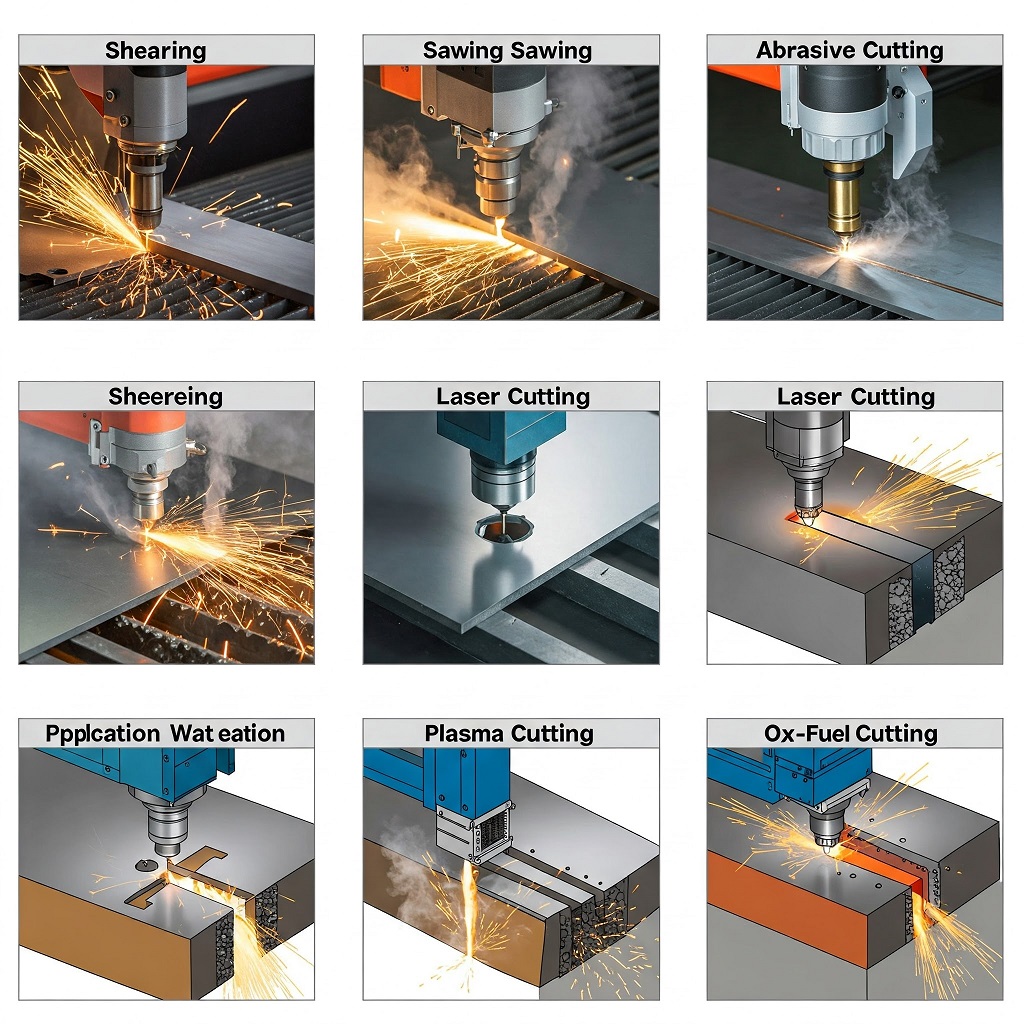
Selecting a metal cutting technique depends largely on the material properties and the desired outcome. Laser cutting is lauded for its precision and ability to construct intricate patterns with minimal waste and high efficiency, making it ideal for small and large-scale applications.
Plasma cutting excels in high-speed cutting of thick materials. Employing a high-velocity ionized gas jet provides an effective solution for robust materials, offering versatility and superior results.
Waterjet cutting is distinguished by its use of high-pressure water, often mixed with abrasive substances, to process diverse materials without altering their inherent properties. This technique’s advantage is the absence of heat-affected zones, preserving material integrity.
EDM (Electrical Discharge Machining) creates complex shapes and detailed features using electrical discharges. This process works especially well for creating parts that need to be extremely delicate and precise.
The Role of Technology in Metal Cutting
The integration of technology has profoundly impacted metal cutting processes. CNC (Computer Numerical Control) machines offer unmatched precision, ensuring consistent quality across production cycles. The capability to program these machines through advanced software enhances flexibility and accuracy, streamlining operations.
Technological advances enable detailed simulations before cutting, optimizing tool paths and reducing material wastage. This technological synergy enhances operational efficiency and contributes to maintaining competitive market positioning.
Applications Across Industries
Metal cutting techniques are proficient in numerous sectors. Precision cutting is crucial for crafting engine parts and structural components that demand stringent tolerances in the automotive industry. The aerospace sector similarly relies on these cutting methods to ensure aircraft parts’ impeccable performance and safety.
In the medical field, cutting technologies facilitate the production of surgical instruments and medical devices, where precision is paramount to patient care outcomes. The electronics industry utilizes these methods to manufacture intricate components required in devices with exacting standards.
Choosing the Best Technique for Your Needs
Selecting an optimal metal cutting method involves evaluating material type, thickness, desired precision, and project budget. Manufacturers must consider these variables to make informed decisions that ensure quality enhancement and process optimization.
It’s crucial to weigh the potential costs of advanced technologies against their benefits, including decreased waste and increased precision. Expert consultation and adherence to industry benchmarks can be instrumental in guiding this choice, aligning strategy with desired production outcomes.
Looking Ahead: The Future of Metal Cutting
The future landscape of metal cutting is shifting towards greater automation and intelligent systems, with AI and machine learning set to revolutionize process efficiency and control. These advancements promise better predictive analytics and adaptive techniques, enhancing responsiveness to design variations and demand.
There is also a significant push within the industry towards sustainable practices, advocating methods that minimize environmental impact. Staying informed on these progressive trends is critical for manufacturers keen on maintaining market leadership.
Sorry, the comment form is closed at this time.