WhatsApp is no longer just a messaging app—it’s now a core business communication channel. With over 2.7 billion active users worldwide and messaging apps influencing customer support and sales decisions globally, WhatsApp Business API has become critical for brands that want fast, personal conversations at scale. According to global telecom and digital communication reports, messaging-based customer interactions now outperform email in response rates and customer satisfaction.
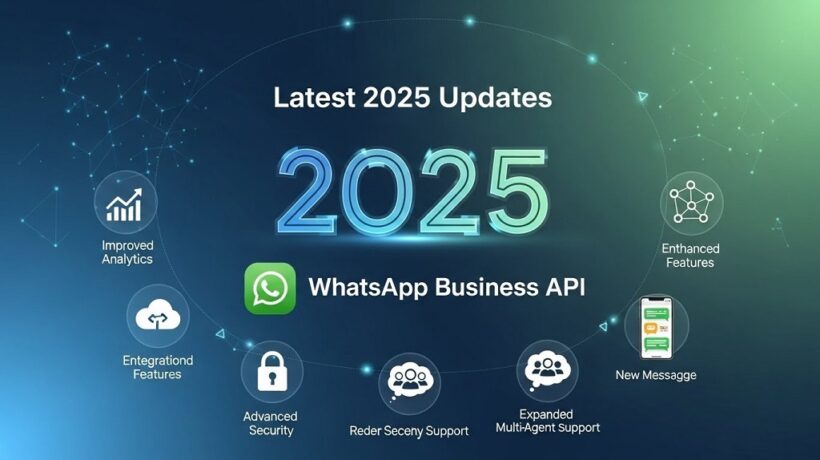
The 2025 updates to WhatsApp Business API focus on smarter automation, clearer pricing, and better customer experience tools. In this guide, you’ll learn what’s new, why it matters, and how to use these updates to improve engagement, support, and conversions
Understanding the Basics
WhatsApp Business API allows medium and large businesses to communicate with customers programmatically. Unlike the free WhatsApp Business app, the API supports automation, CRM integration, chatbots, and large-scale messaging.
For example, an eCommerce brand can automatically send order confirmations, shipping updates, and customer support replies—all within WhatsApp—using the API instead of manual chats.
Why This Topic Matters
The 2025 updates are important because WhatsApp is shaping how customers expect to communicate with brands.
Key benefits:
-
Faster customer responses with AI-powered automation
-
More predictable pricing and message categories
-
Better tools for personalization at scale
Real-world impact:
Businesses using conversational messaging see higher open rates and faster issue resolution compared to email or web forms.
How users apply it:
Customer support teams, sales teams, and marketing teams use the API to manage conversations, automate workflows, and reduce response time.
Scenario:
A fintech startup uses WhatsApp Business API to verify users, send transaction alerts, and answer FAQs automatically—cutting support tickets by nearly half.
Key Components / Features / Steps
Component 1: Updated Pricing Model (Conversation-Based)
In 2025, WhatsApp continues refining its conversation-based pricing, but with clearer message categories:
-
Utility (order updates, alerts)
-
Authentication (OTP, verification)
-
Marketing (promotions, offers)
-
Service (user-initiated support)
This helps businesses better forecast costs and choose the right message type instead of sending everything as marketing messages.
Component 2: AI-Powered Automation & Smart Replies
AI integration is one of the biggest updates. Businesses can now:
-
Use AI to suggest replies to agents
-
Power smarter chatbots that understand intent
-
Route chats automatically based on keywords or behavior
Actionable tip: Combine AI replies with human review to maintain accuracy and brand tone.
Component 3: Advanced Templates & Personalization
Message templates in 2025 allow richer personalization using dynamic variables and conditional logic.
Mistake to avoid: Sending generic templates without personalization often leads to lower engagement or message rejection.
Mini case insight: Brands that personalize templates with names, order IDs, or location see higher response rates.
Practical Tips You Can Apply Today
-
Step one: Audit your current message types and reclassify them under the new pricing categories.
-
Step two: Set up basic automation for FAQs, order updates, and appointment reminders.
-
Step three: Integrate WhatsApp Business API with your CRM or helpdesk for full conversation history.
These small steps can significantly reduce manual workload while improving response speed.
Common Mistakes and How to Avoid Them
-
Mistake: Overusing marketing messages
Fix: Balance promotional content with utility and service messages.
-
Mistake: Ignoring template approval guidelines
Fix: Follow WhatsApp’s content policies and keep templates clear and user-focused.
-
Mistake: Full automation with no human fallback
Fix: Always allow escalation to a live agent when needed.
Real Example or Mini Case Study
A mid-sized online retailer integrated WhatsApp Business API in early 2025 for order tracking and support. Customers received real-time shipping updates and could ask questions directly in WhatsApp. Within three months, customer satisfaction scores improved, and repeat purchases increased because users felt supported without switching platforms.
Final Thoughts
The latest 2025 updates to WhatsApp Business API make it more powerful, smarter, and business-friendly than ever. From clearer pricing to AI-driven automation, these changes help brands build faster, more personal customer relationships.
Action step: Review your current customer communication setup and start testing WhatsApp Business API features that align with your growth goals.
FAQs
What is new in WhatsApp Business API in 2025?
Key updates include improved pricing transparency, AI automation, and more flexible message templates.
Is WhatsApp Business API free?
No. Pricing is based on conversation categories, such as utility, marketing, and service messages.
Who should use WhatsApp Business API?
Medium to large businesses that need scalable, automated customer communication.
Can small businesses benefit from these updates?
Yes, especially if they handle high message volumes or want automation beyond the basic WhatsApp Business app.
Is AI mandatory in WhatsApp Business API?
No, but AI features are optional tools that help improve efficiency and response speed.
Related Topics: Practical Steps to Streamline IT Incident, Request, and Change Management
Related Topics: Smart Steps for Building Retirement Confidence
References